Well it finally stopped being hot. Kind of. As I have previously mentioned, the weather here is very tempermental and this last week has been a series of gray, wet days with brief breaks in the clouds to let in some sun as well as many sunny days with rainy afternoons.
Por fin paró de hacer tanto calor. Bueno, más o menos. Como he dicho antes, el clima aquí es muy temperamental y está semana ha sido una serie de días grises y mojadas con un poquito de sol y días soleadas con tardes lluviosas.
Now last week I said I was going to give you guys a glimpse into my life as a college student here so without any further ado, here’s what goes on during my average day at the UCE.
La última semana dije que les iba a dar un vistazo de mi vida aquí como un estudiante universitario entonces no voy a demorar más, esto es lo que pasa durante mi día típico en la UCE.
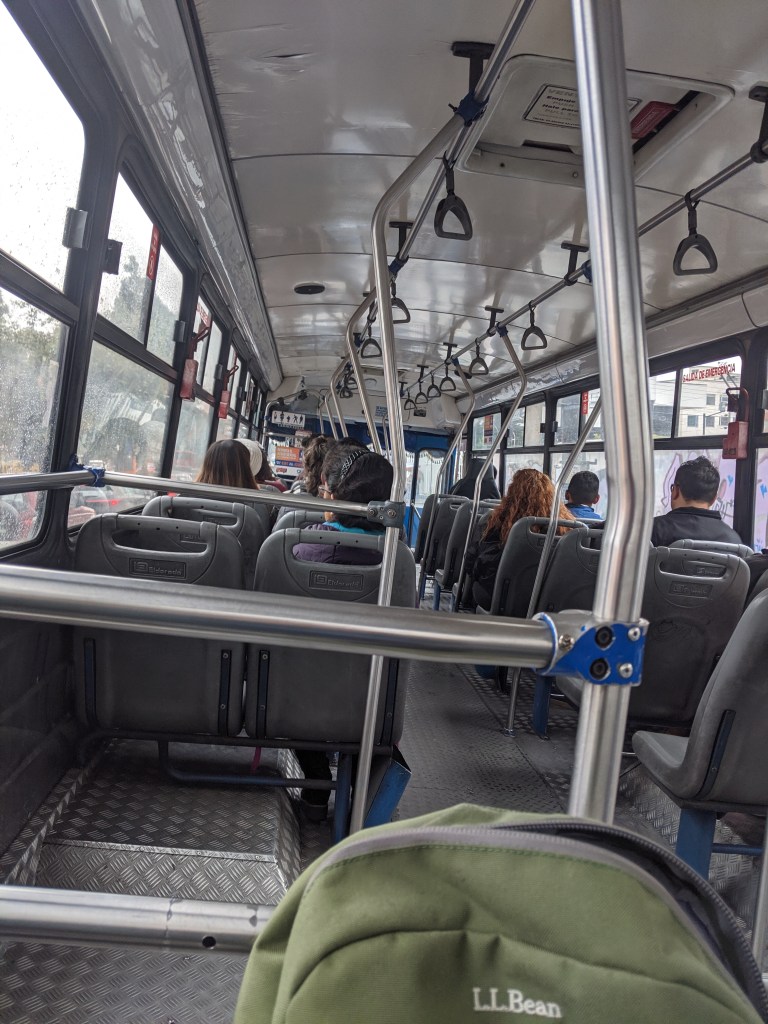
After doing some exercise in the morning and eating a quick snack, I catch the Transzeta, the bus that gets me to my destination. I lucked out on a nicer bus this Wednesday but one still has to deal with the occasional bus shaking rattle and screech of the brakes as we careen from lane to lane.
People here have to have nerves of steel to drive because it’s an absolute battle and only the most daring driver will make it to their destination on time.
Después de hacer ejercicio por la mañana y de comer un bocadito rápido, cojo el Transzeta, el bus que me lleva a mi destino. Este miércoles me tocó un bus más nuevito pero todavía tenía que soportar la agitación del bus y el chillido de los frenos cuando cambiamos entre carriles.
Las personas aquí tienen que ser bien valientes para manejar porque es una batalla total y sólo los conductores intrépidos llegarán a su destino a tiempo.
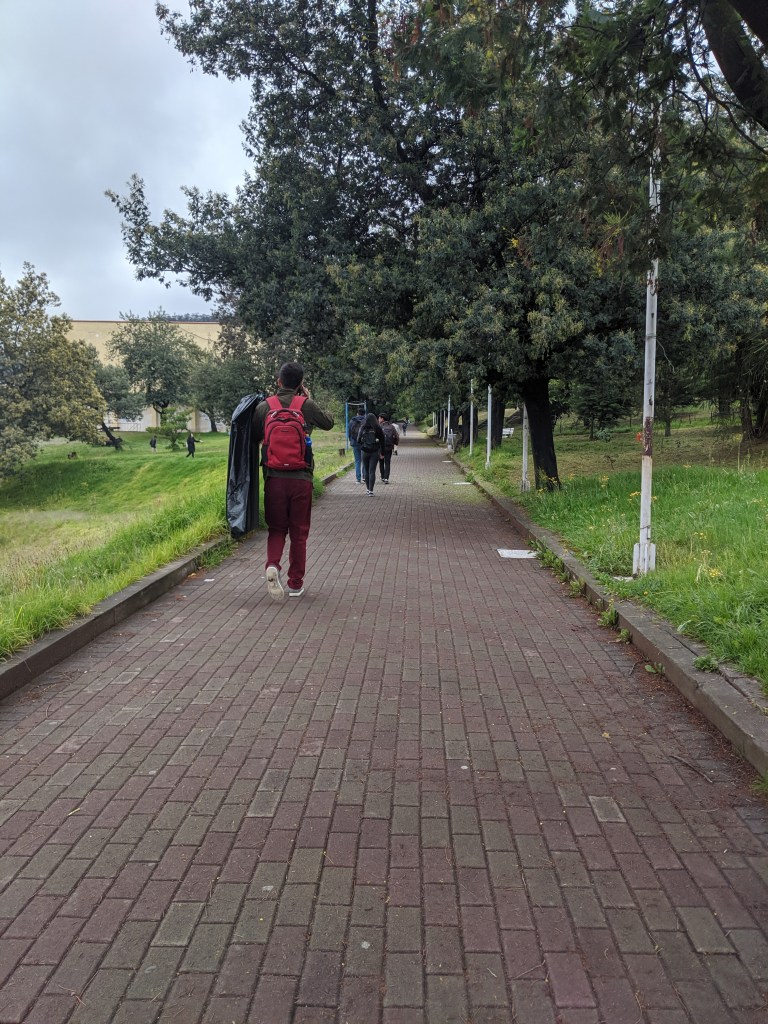
Forty minutes and several near misses later, I arrive at the main campus of the UCE and start the trek up to the facultad (arts department) at the opposite end of campus.
Cuarenta minutos y muchos casi-accidentes, llego al campus principal de la UCE y empiezo la caminata a la facultad (de artes) al lado opuesto del campus.
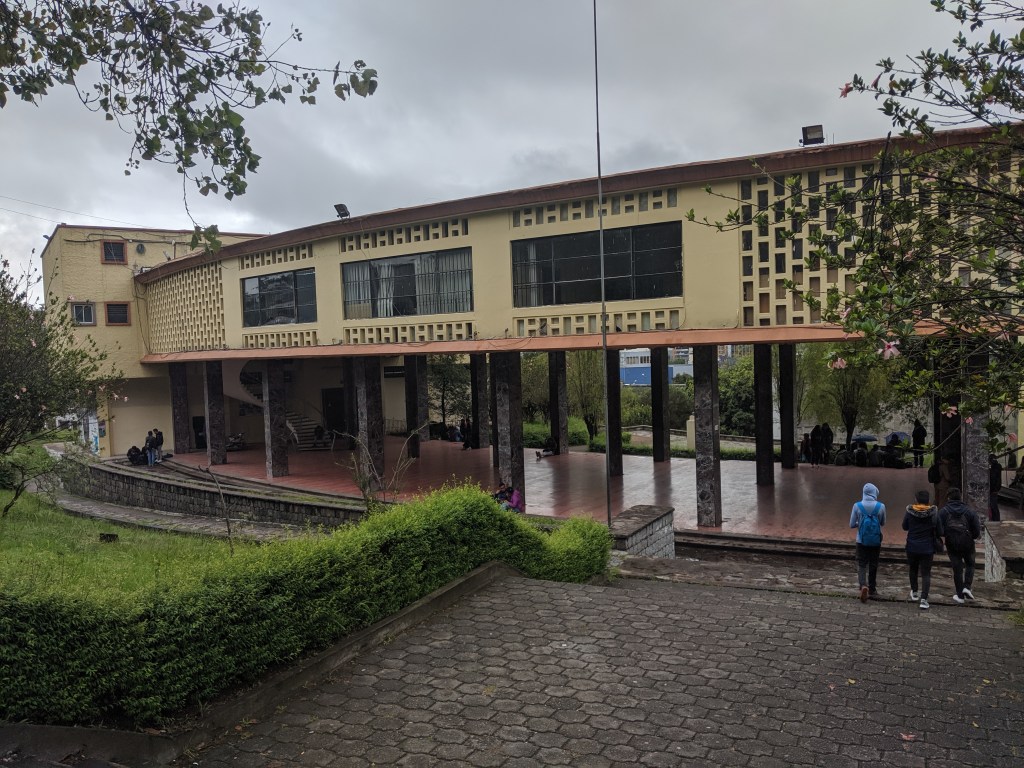
I don’t remember which department this is but all I know is that it’s kind of ugly but then again, what do I know about architecture? (Enough to know that that ain’t it sis…)
No me acuerdo que facultad es esta pero lo que sí se es que me parece un poco fea pero, ¿qué sé sobre la arquitectura? (Suficiente para decir que eso no es bonito…)
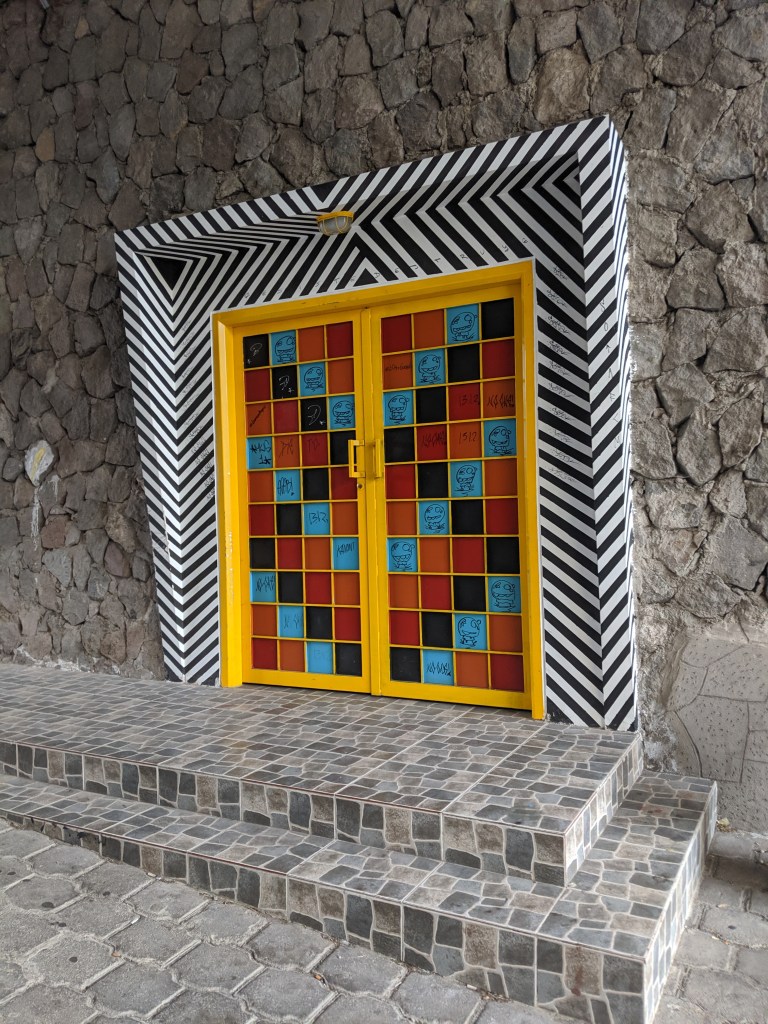
A strange doorway, I wonder what’s behind it…
Una puerta extraña, me pregunto qué hay detrás de ella…
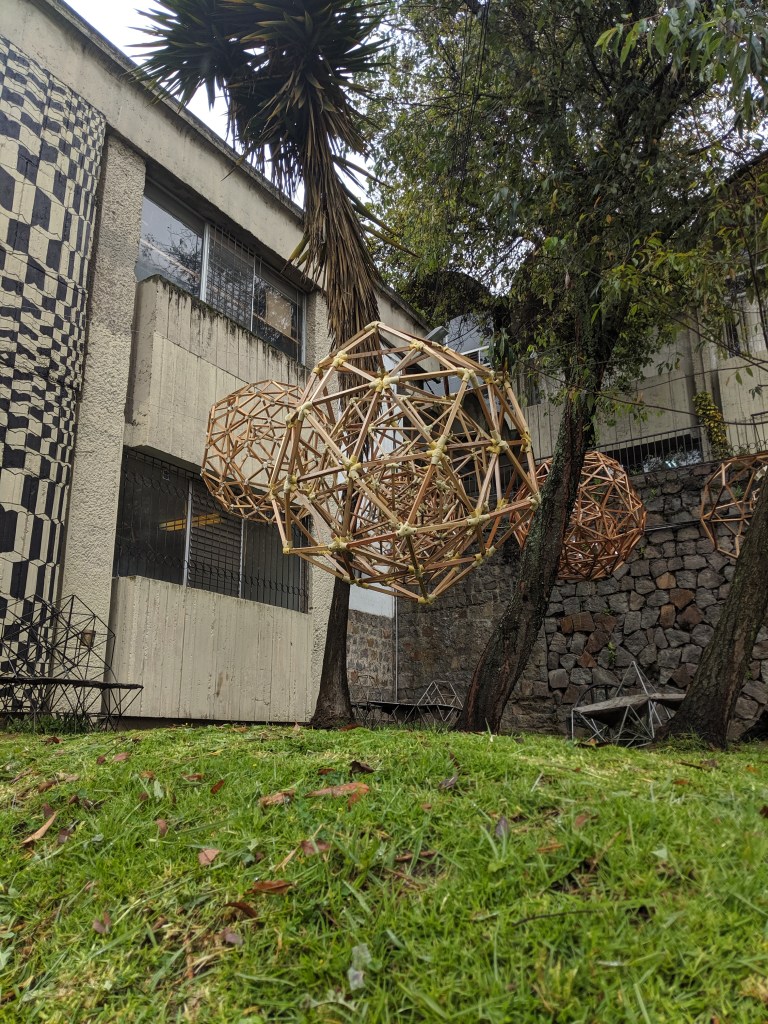
The department of architecture always keeps us on our toes with their projects and this one is definitely one of those projects. I’m not sure what purpose these spheres serve but they look awesome.
La facultad de arquitectura siempre nos están sorprendiendo con sus proyectos y este proyecto es definitivamente una de esas sorpresas. No sé de que servirán esas esferas pero se ven geniales.
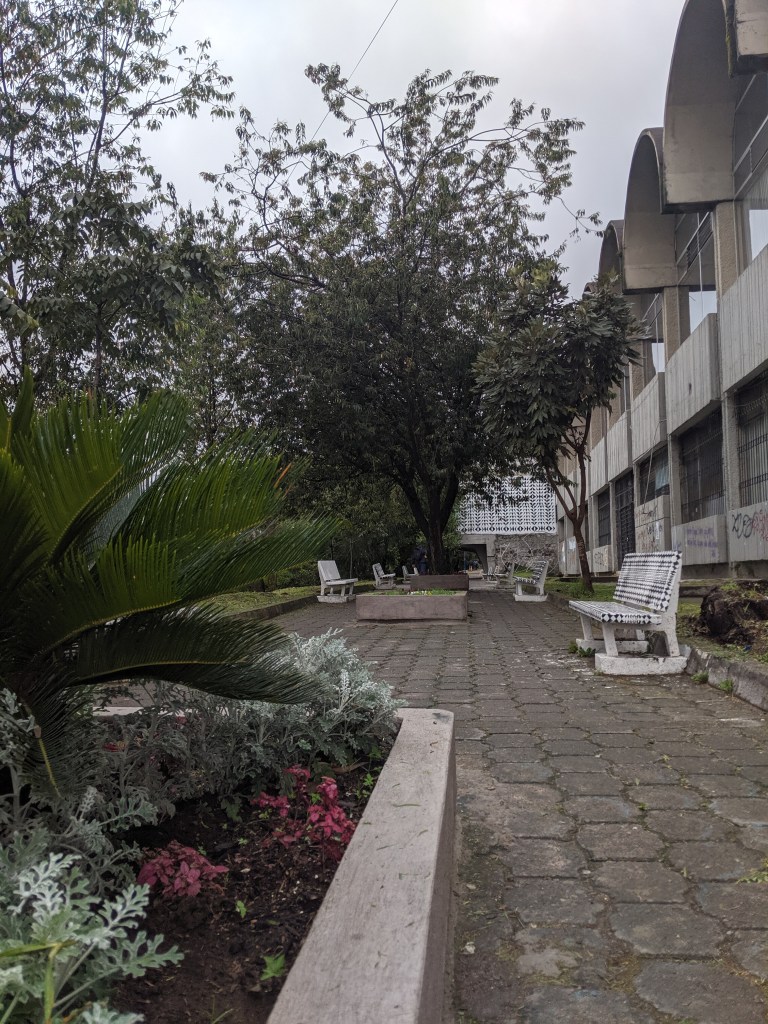
Almost there…
Llegando…
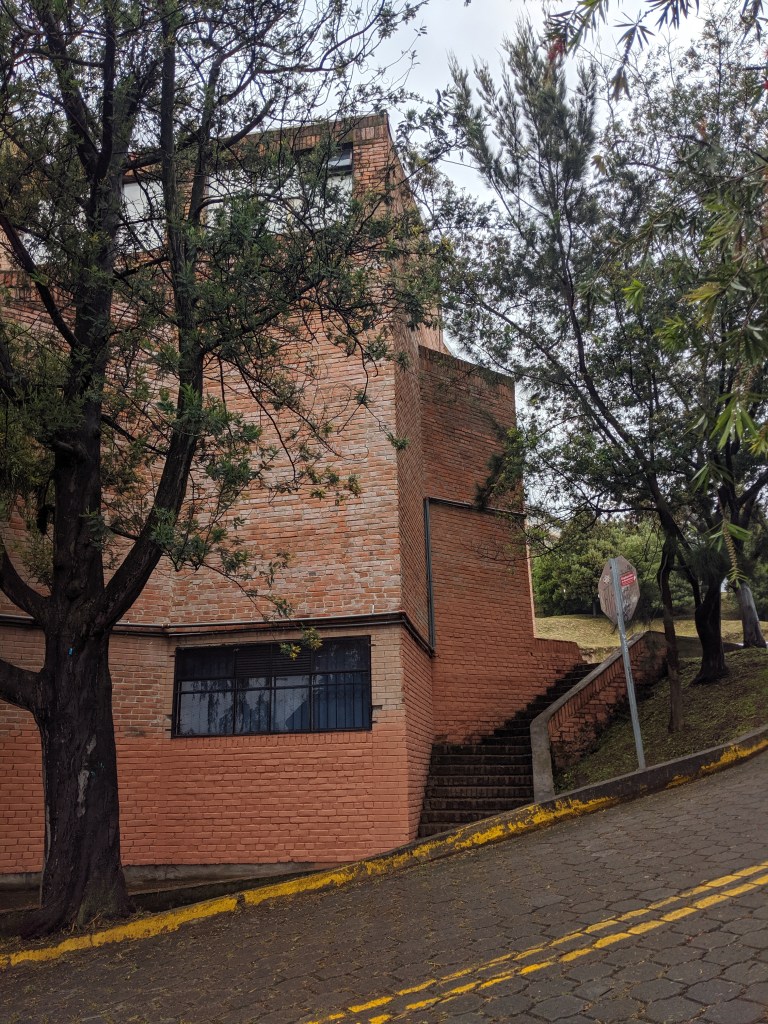
And here she is, in all her glory: the FAUCE (arts department). Even though this building is one of the oldest on campus and is most definitely not up to fire/building/earthquake code, there’s something comforting about stepping inside this dimly lit building and being greeted with the sound of many an instrument…
Y aquí está, en toda su gloria: la FAUCE (facultad de artes). A pesar de que es uno de los edificios más viejos de la U y no es nada seguro en caso de un fuego o terremoto, pero hay algo calmante cuando entras a este edificio oscuro y te recibe el sonido de todo tipo de instrumento…
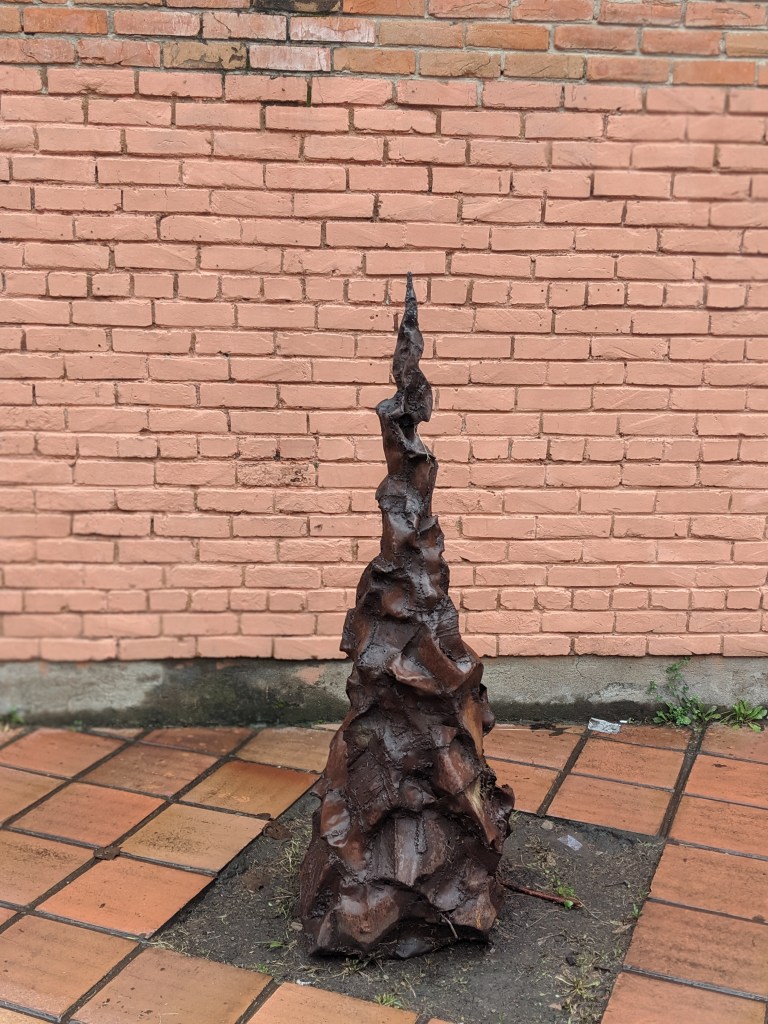
Just outside the main entrance to the FAUCE, there’s this thing. I’m not sure what to make of it but to me it seems to be a rusty unicorn horn? (Let me know what you guys think it looks like in the comments.)
Afuera de la entrada principal de la FAUCE, hay esta cosa. No sé qué será pero parece un cuerno oxidado de unicornio. (Dejen sus opiniones en los comentarios.)
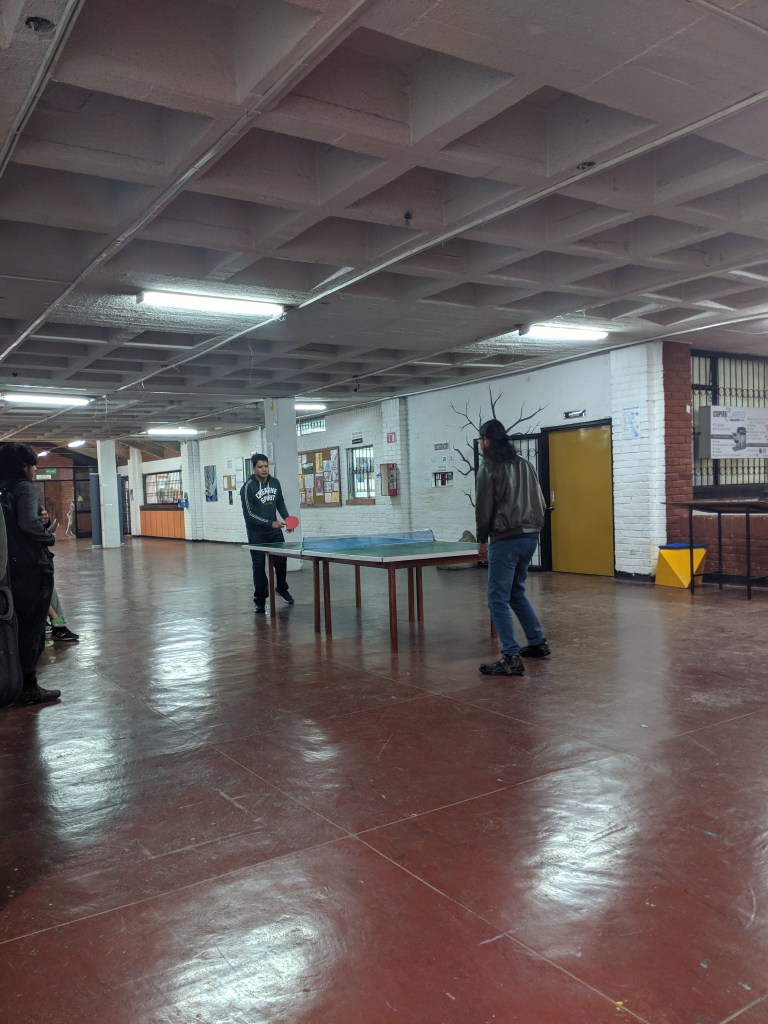
What better way to spend a cold, damp morning at the FAUCE than by playing some ping pong? This ping pong table makes its way around the building and there’s always somebody having fun with it.
No hay una mejor manera de pasar una mañana mojada y fría en la FAUCE que pasarla jugando ping pong. Esta mesa viaja por el edificio y siempre hay alguien jugando.
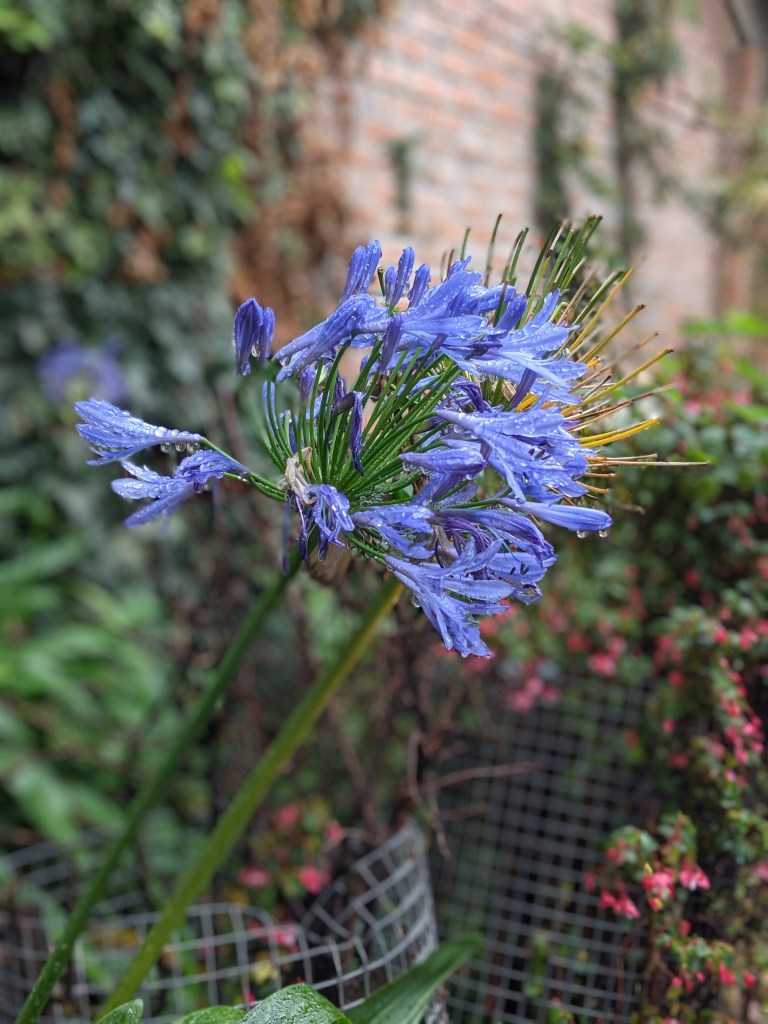
Out in one of the two courtyards within the facultad you can find some beautiful flowers and that morning they were adorned with droplets of rain water that sparkled in the light.
Afuera en uno de los dos patios dentro de la facultad puedes encontrar unas flores hermosísimas y esa mañana estaban adornadas con gotitas de agua que brillaban en la luz.
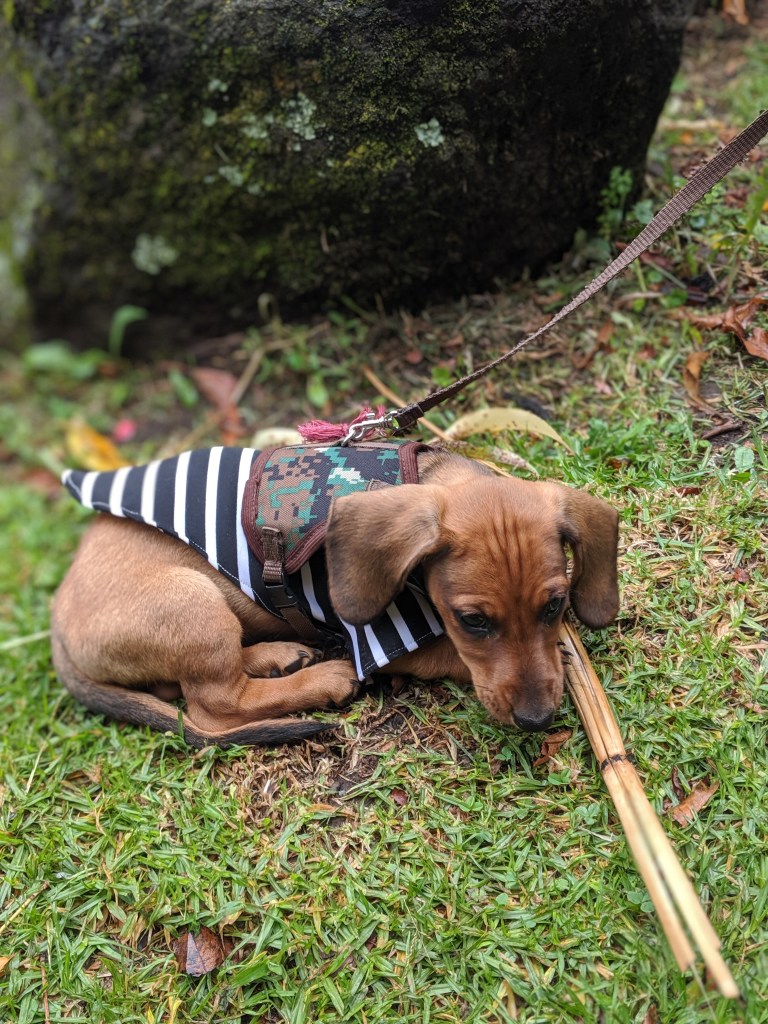
It’s not unusual to see people with their pets on campus and this cute doggo was too adorable to not have his photo taken.
No es raro ver unos estudiantes con sus mascotas en la U y este perrito era tan adorable que tenía que tomarle una foto.
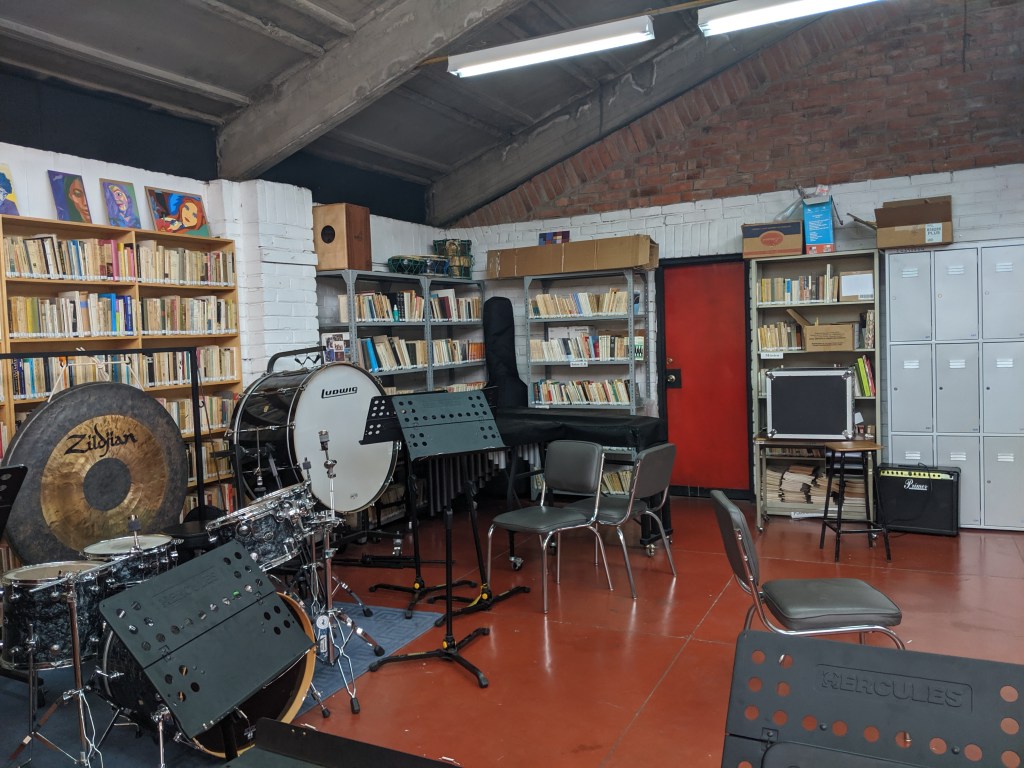
Around ten, my first class starts: Andean Ensemble with Professor Jhonny. We rehearse in one of the general practice rooms though occasionally we’ll have to practice in another practice room, that is, if there’s one available… (We may be one of the bigger departments but we don’t have nearly the space or the funding we need.)
Alrededor de las diez, empieza mi primera clase: Ensamble Andino con el Profesor Jhonny. Ensayamos en uno de el aula de profesores pero algunos veces nos toca ensayar en otra aula, si hay una disponible… (Somos una de las facultades grandes pero no tenemos suficientes aulas ni recursos.)
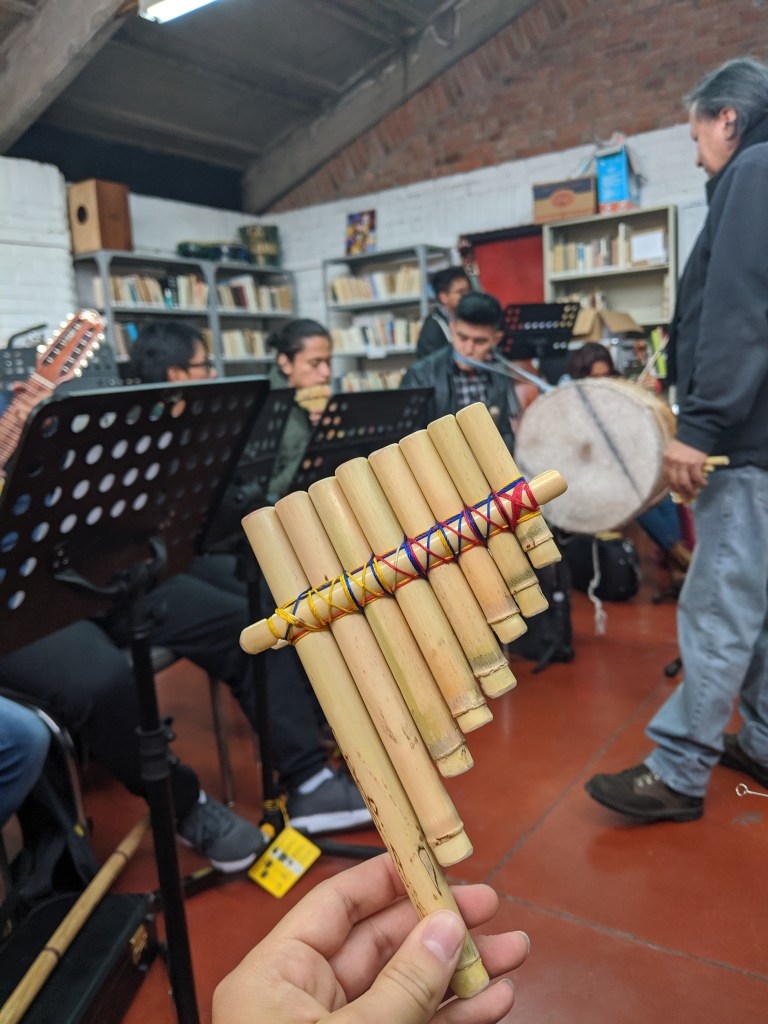
In this ensemble I play mostly panflutes: pallas (the one I’m holding in the photo), sikus, zampoñas… I’m not the best when it comes to wind instruments but everyone is encouraging and it makes this learning experience that much more fun.
En este ensamble toco las zampoñas: pallas (la que tengo en la foto), sikus… No soy la mejor para tocar los instrumentos de viento pero todos me apoyan y hace la experiencia de aprender mucho más divertido.
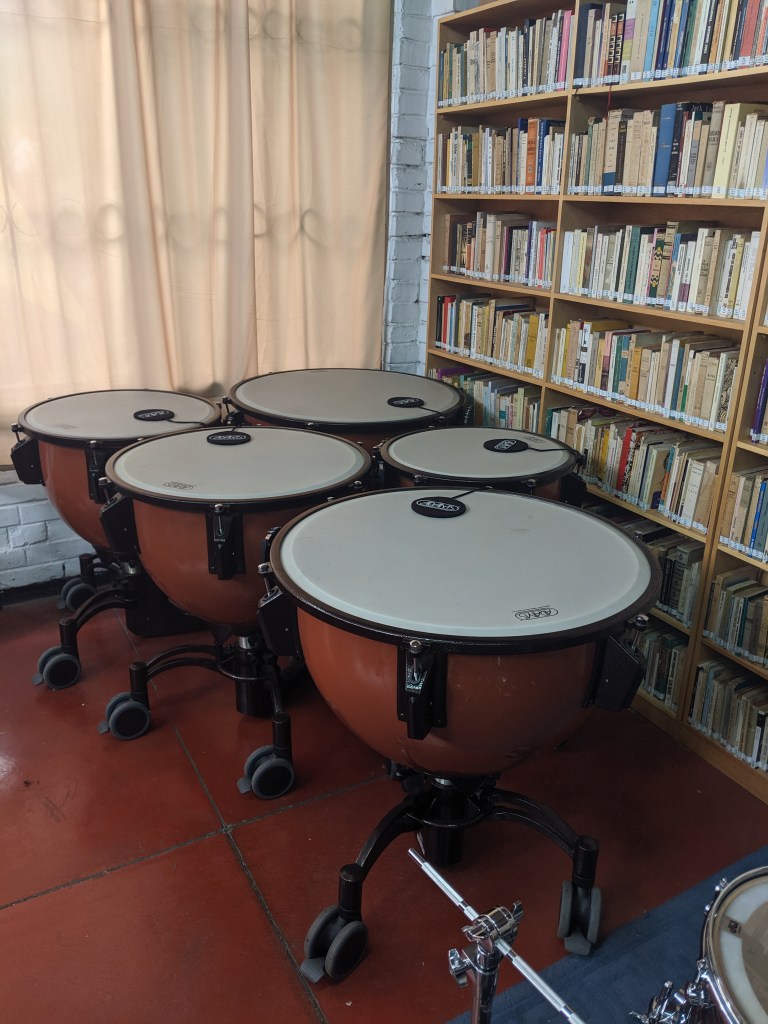
At the back of this particular room, there’s a small herd of timpanis and I can’t help but be reminded of Thayer, one of my classmates from Newport. Thayer, if you’re reading this post, I hope you’re doing well and I miss you a lot my fellow trombone.
En la parte de atrás de este cuarto, hay una pequeña manada de timbales y me hicieron acordar de Thayer, un compañero del colegio de Newport. Thayer, si estas leyendo esta publicación, espero que estes bien y te extraño mucho mi compañero de trombón.
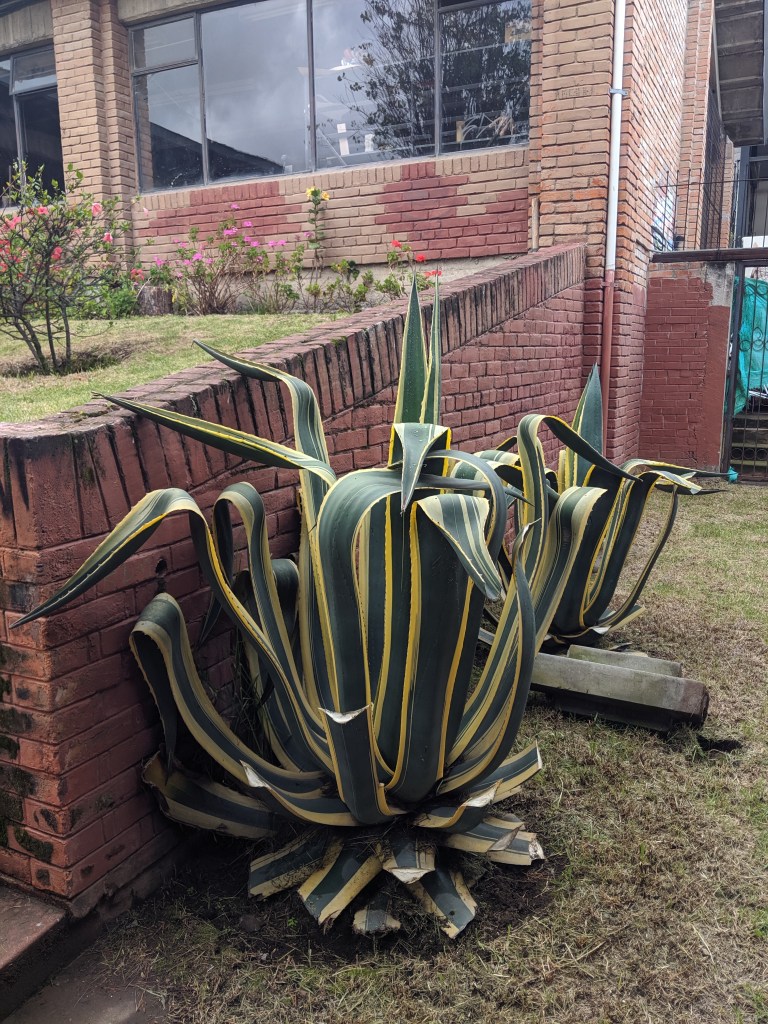
After Ensemble, it’s off to Construction of Afro-Ecuadorian Instruments with Professor Jackson. Along the way, I pass through the other courtyard and these gigantic plants. (Not sure what kind they are, if anyone knows feel free to let me know what the heck they actually are. Thank you!!!)
Después del Ensamble, voy a la clase de Construcción de Instrumentos Afro-Ecuatorianos con el Profesor Jackson. En ruta a la clase, paso por el otro patio y estas plantas gigantes. (No sé que tipo serán pero si alguien sabe deje un comentario. ¡¡¡Gracias!!!)
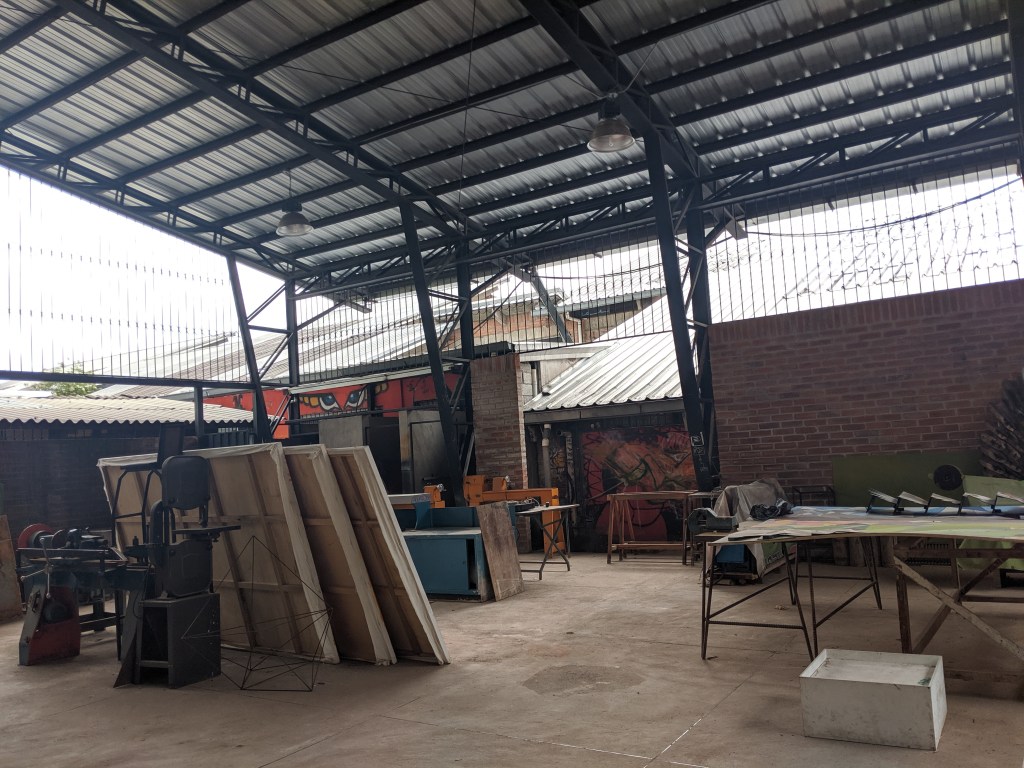
This class is held in a small workshop inside a bigger workshop where you can find all sorts of interesting projects.
Esta clase se realice en un taller pequeño dentro de otro taller donde se puede encontrar muchos proyectos interesantes.
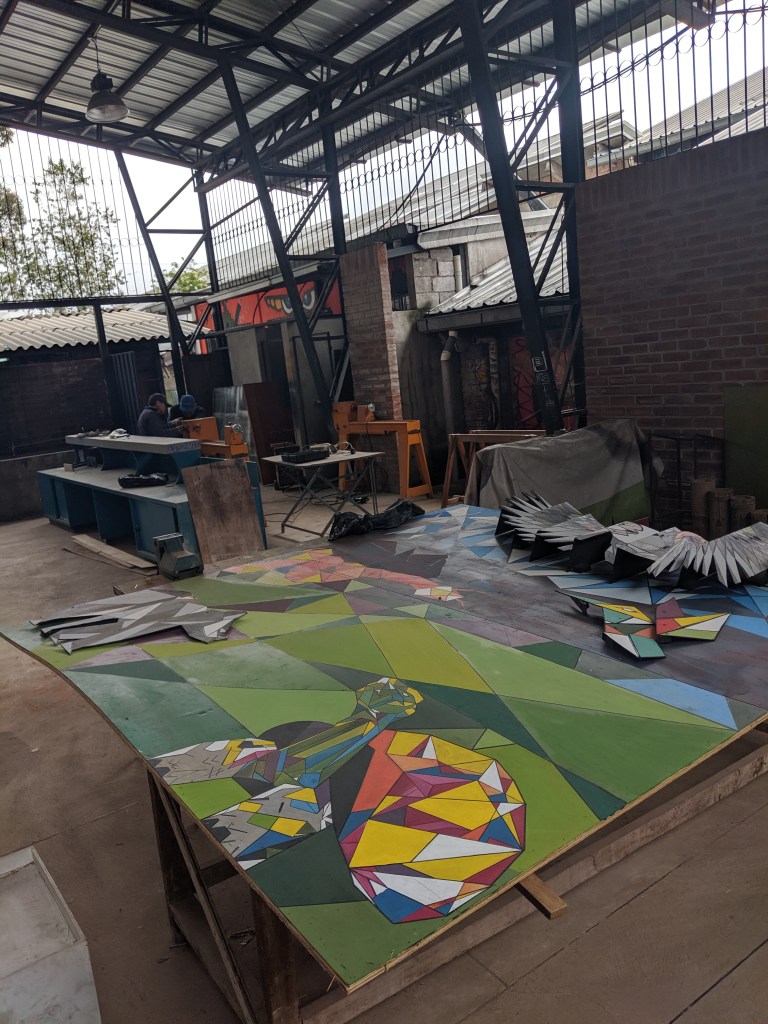
For example: Here’s a group project that was done for a showcase. On it you can find many native ecuadorian animals such as the Galapagos Tortoise, the Oso Anteojos (the Spectacled Bear), and the Andean Condor.
Por ejemplo: Aquí hay un proyecto grupal que fue completado para una exhibición. En esta obra puedes encontrar muchos animales ecuatorianos como el tortuga de Galápagos, el oso anteojos, y el cóndor andino.
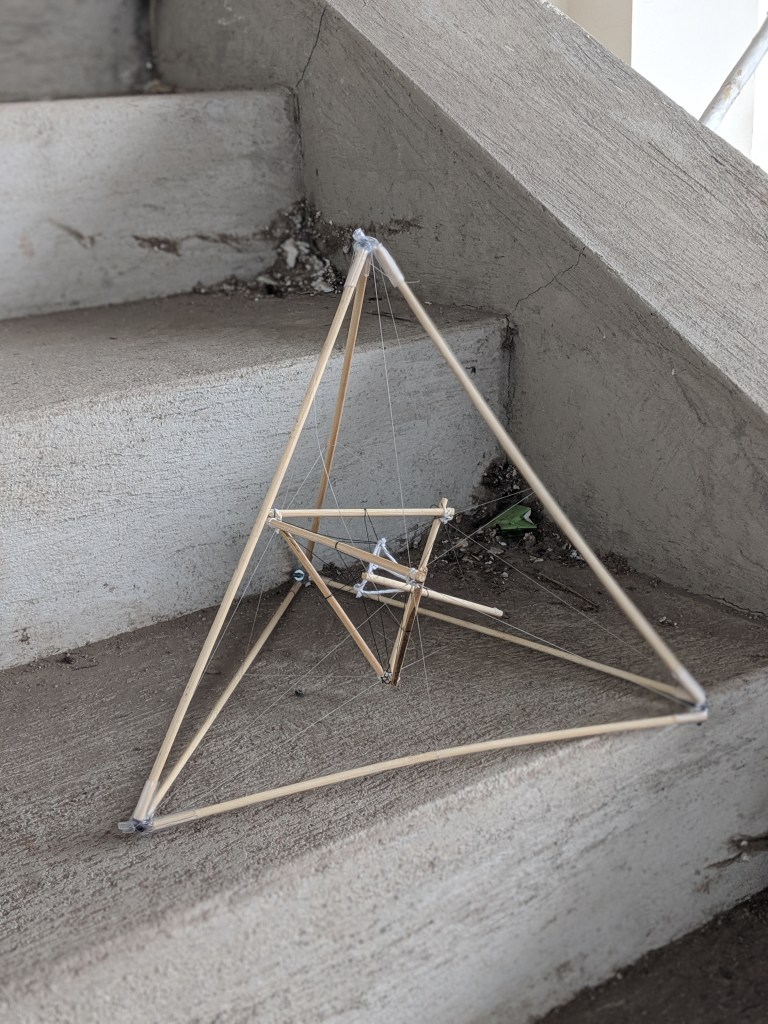
A tetrahedron left behind by one of the students.
Un tetraedro que dejó un estudiante.
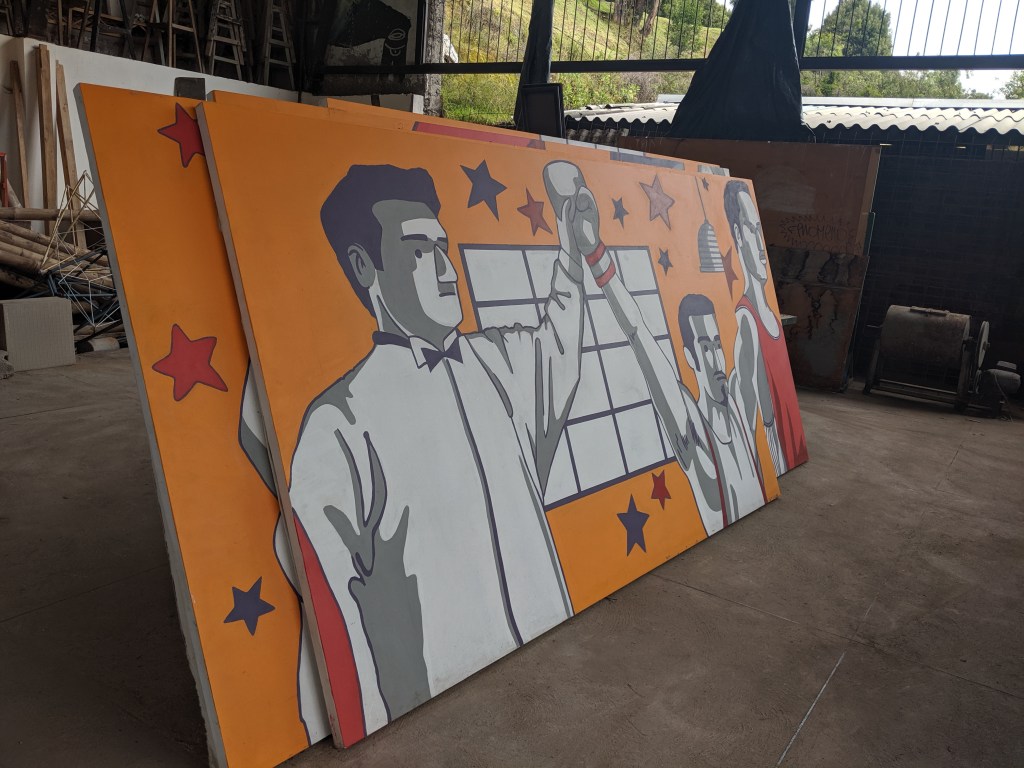
I am not sure what this was for but it’s pretty impressive given the size and details.
No sé para qué era esto pero es muy impresionante por su tamaño y sus detalles.
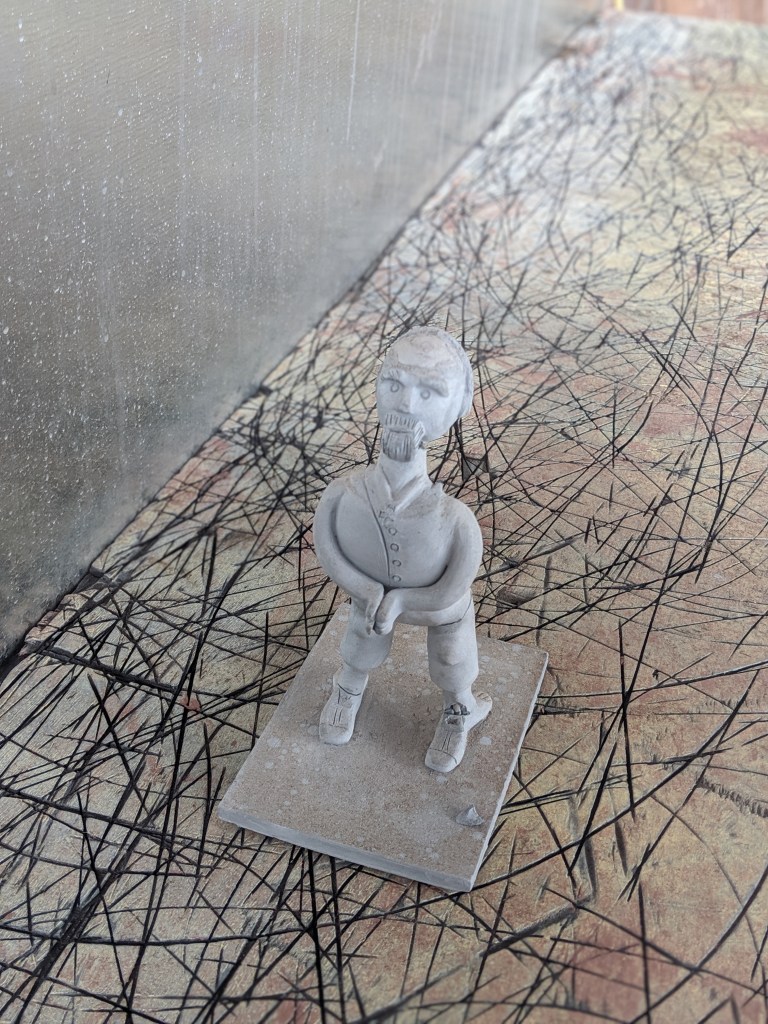
A strange figurine, he looks as though he were about to start giving you a stern talking to.
Una figurita extraña, parece que te va hablar de algo que hiciste mal.
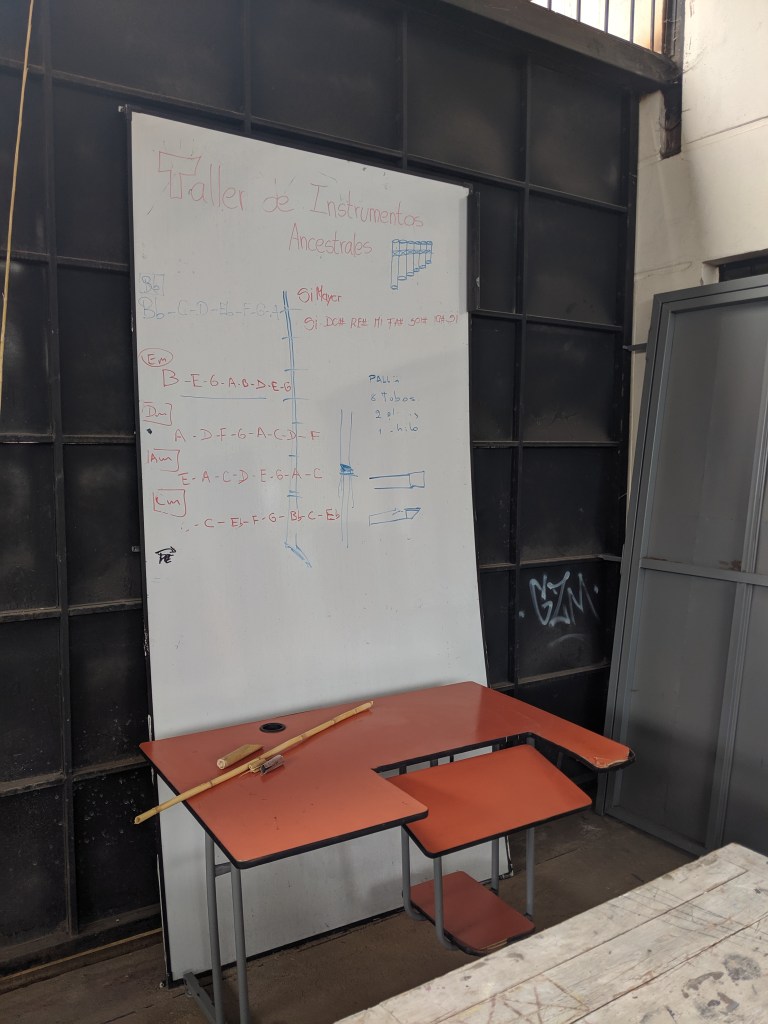
Other construction classes take place here as well. The whiteboard has the instructions for making pallas,a traditional Andean instrument.
Professor Jhonny teaches this class. I would attend this class but it’s a little too early for me and catching a bus at six in the morning is not my idea of fun.
Hay otras clases de construcción que dan en este lugar. En la pizarra está escrita las instrucciones para hacer pallas, un instrumento andino.
El Profe Jhonny enseña esta clase. Yo me iría pero es un poco temprano para mi y coger un bus a las seis de la mañana no suena nada divertido.
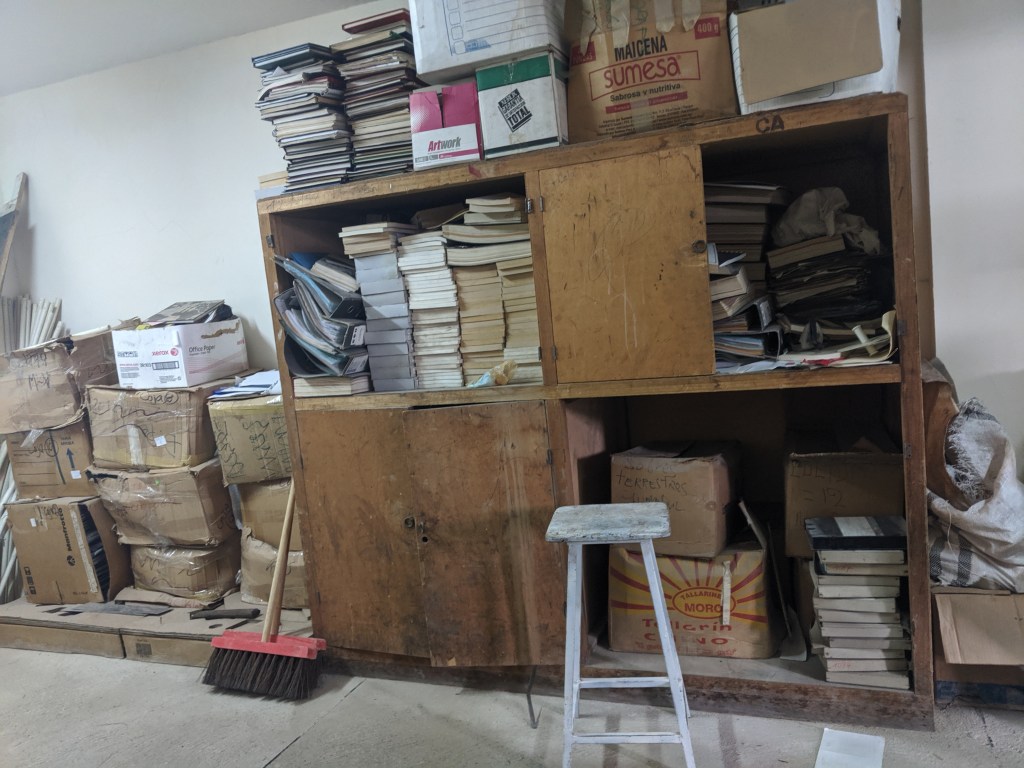
Inside the workshop, there’s this shelf filled with old documents and random books written in some European language. I’m not sure why they haven’t cleaned this area out yet since I’m sure you could probably find more than a few tarantulas among the paper.
Dentro del taller, hay muchos documentos y libros viejos escritas en un idioma europeo. No sé por qué no limpien este lugar porque si ha de haber unos tarántulas escondidas en esas hojas.
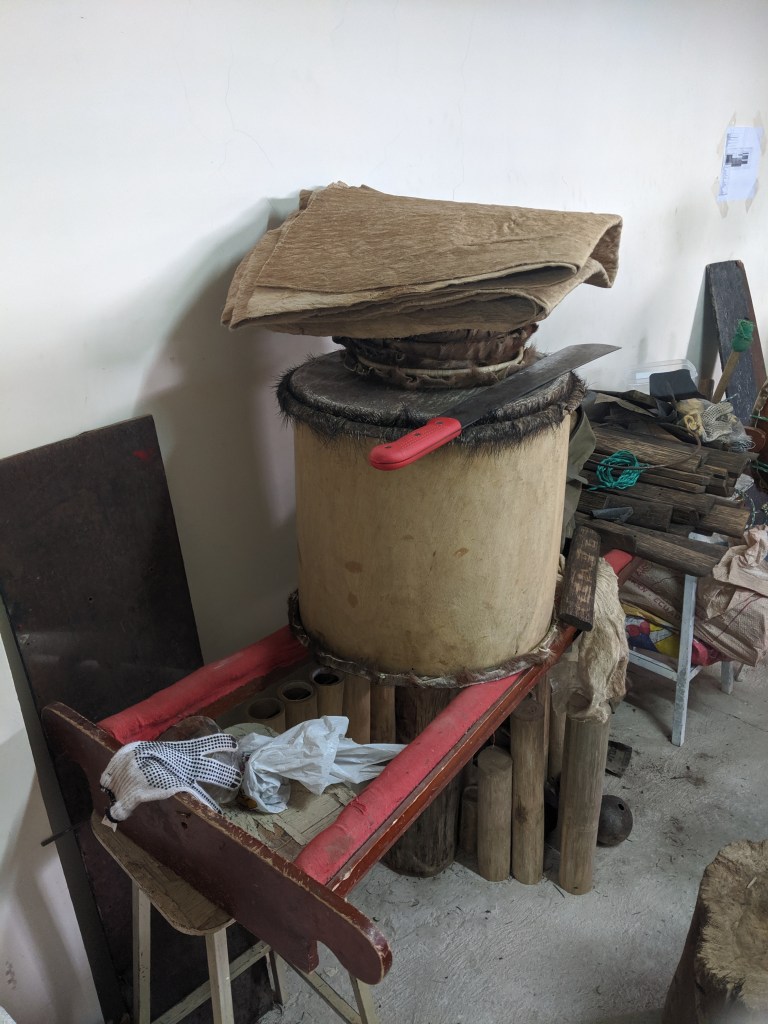
There’s a lot going on in this photo so allow me to explain from top to bottom. The “cloth” on top is actually made from the bark of a coastal tree. (Fun fact: This is the same material used to make the hat that Professor Jackson wears. It’s also used as a blanket.) Of course, there’s a machete lying on top of a bombo in the process of being made. Then the red thing is a muerto, a marimba frame. Below that, you can see canutos de guadua (a bamboo-like plant), amplifiers for the marimba tone bars.
Hay mucho que está pasando en esta foto entonces déjenme explicar de arriba para abajo. La “tela” que ves arriba está hecha de la corteza de un árbol costeño. (Dato curioso: Esa es la misma material que se usa para hacer las gorras que se pone el Profesor Jackson. También se usa como una cobija.) Allí puedes ver una marimba encima de un bombo incompleto. La cosa roja es un muerto, la estructura de una marimba. Debajo de eso, puedes ver unos canutos de guadua (un tipo de bambú) que se usan como amplificadores para las tablas de la marimba.
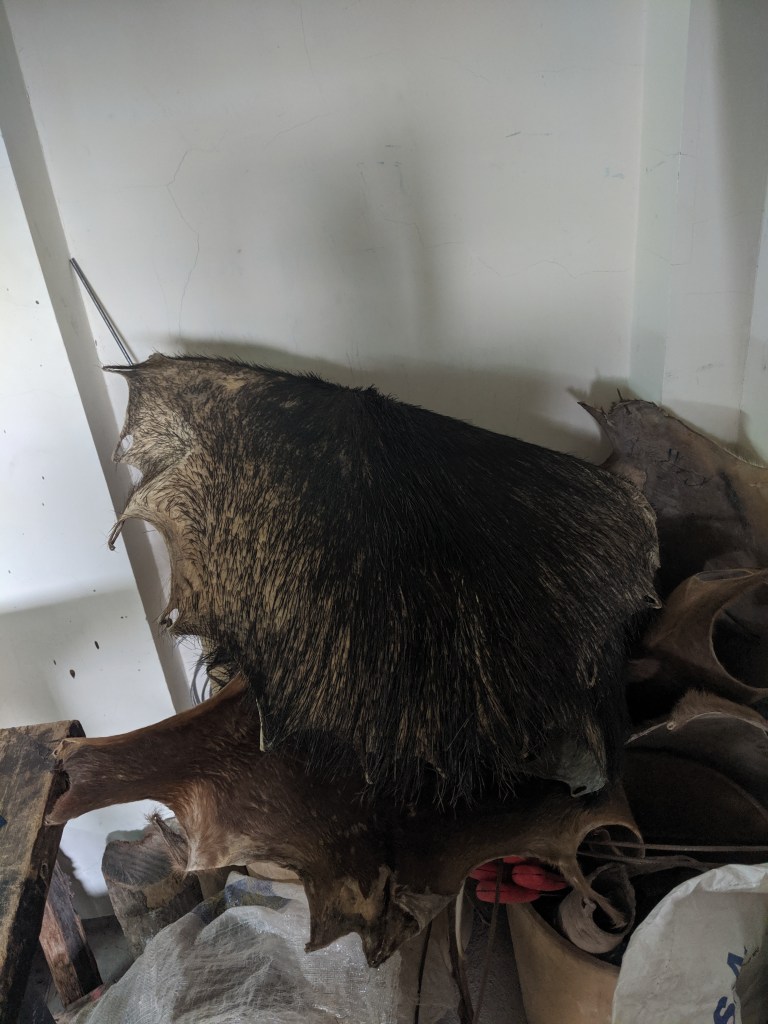
In another corner of the taller (workshop), you can find some pieles (skins) of all sorts of animals: venado, saino, y tatabra. The venado (deer) skin is used for cununos and the side of the bombo that is played. Saino (collared peccary) and tatabra (white lipped peccary) skin is used for the other side of the bombo that serves as an amplifier.
En otra esquina del taller, puedes encontrar unas pieles de todo tipo de animal: venado, saino, y tatabra. La piel del venado se usa para los cununos y el lado del bombo que se toca. Piel de saino y tatabra se usa para el otro lado del bombo que sirve como amplificación.
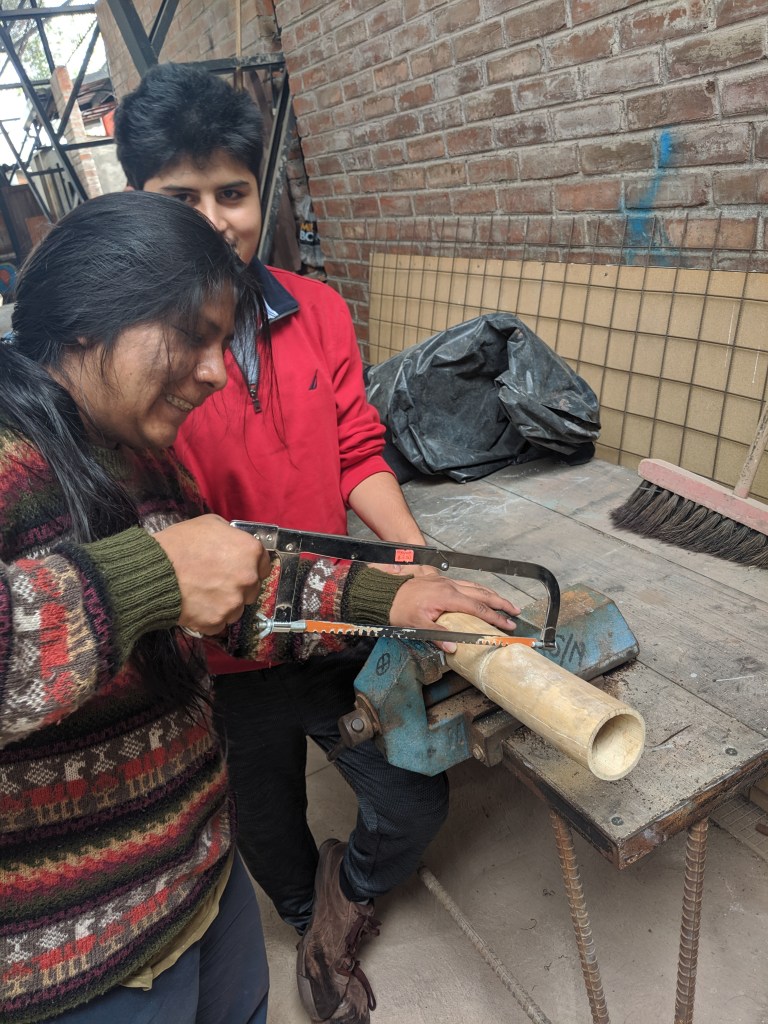
Classmates beginning the process of making a guasá, a rain stick like instrument made from guadua.
Mis compañeros empiezan el proceso de hacer un guasá, un instrumento hecho de guadua parecido al palo de lluvia.
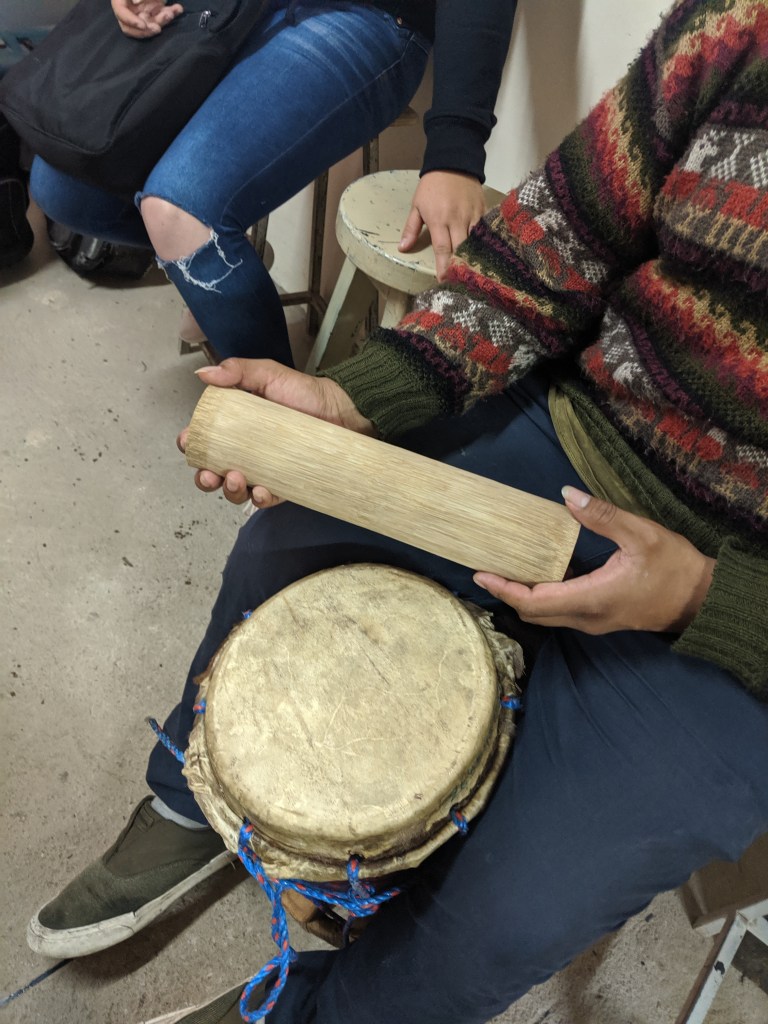
After cutting a portion of the guadua, the outside layer is cut away with a machete. This allows the sound produced by the instrument to travel outside of the actual instrument itself.
Después de cortar una porción de la guadua, se saca la parte de afuera con machete. Esto deja que el sonido atraviesa los paredes del instrumento.
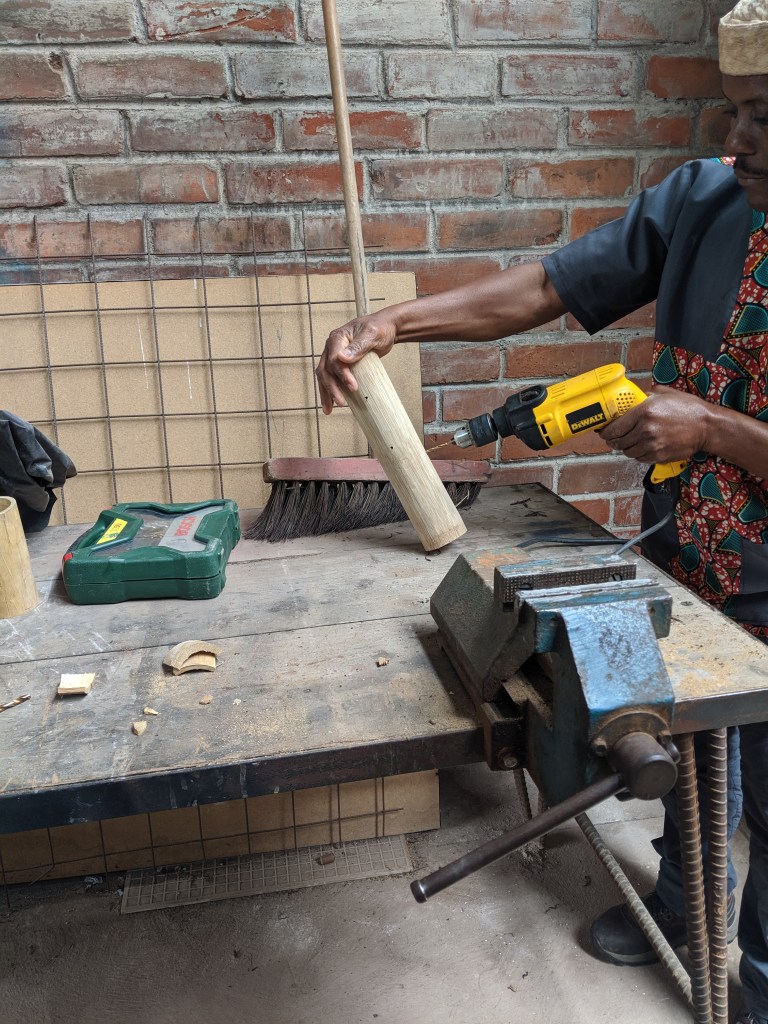
Professor Jackson drills holes in the huasa. One of these holes is bigger than the rest to help facilitate the insertion of the achira seeds.
Profesor Jackson ayuda con el taladro de los huecos del guasá. Un hueco es más grande que los otros para ayudar con el proceso de meter las semillas de achira.
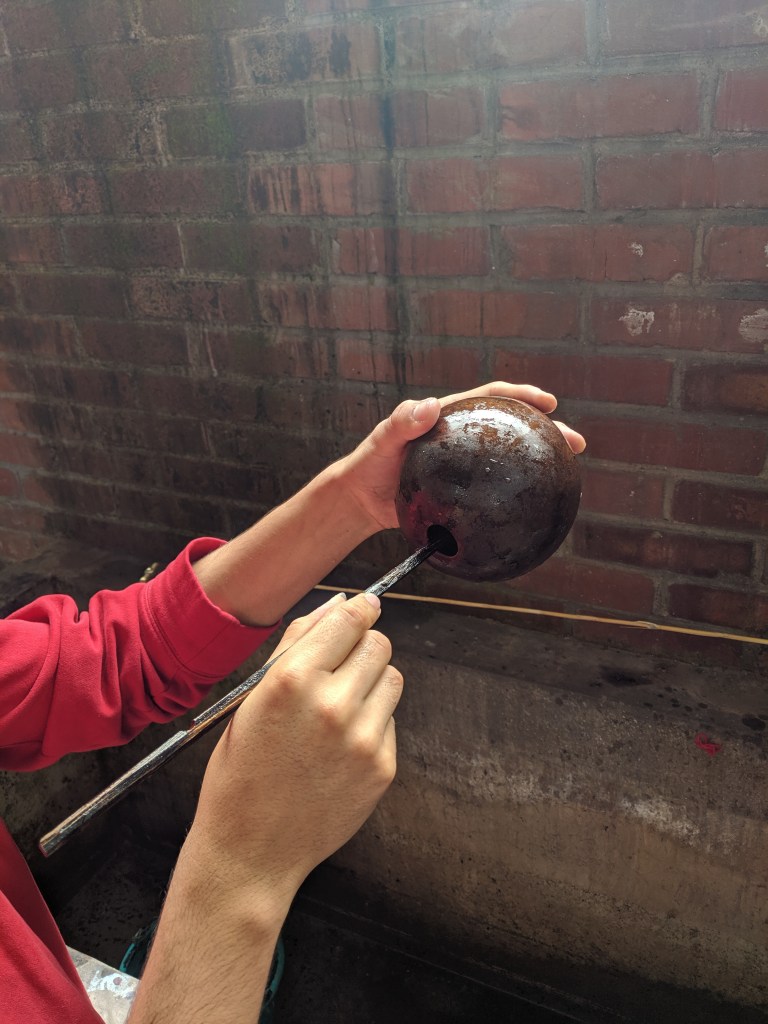
During this time, we also started making a pair of maracas from a bototo (a gourd plant). Two holes are drilled on either side and using a stick and some water, the pit is removed from the bototo.
Durante este tiempo, también empezamos a hacer un par de maracas de un bototo (un tipo de calabazo). Se taladra dos huecos en el bototo y usando un palito y agua, se saca la semilla de adentro.
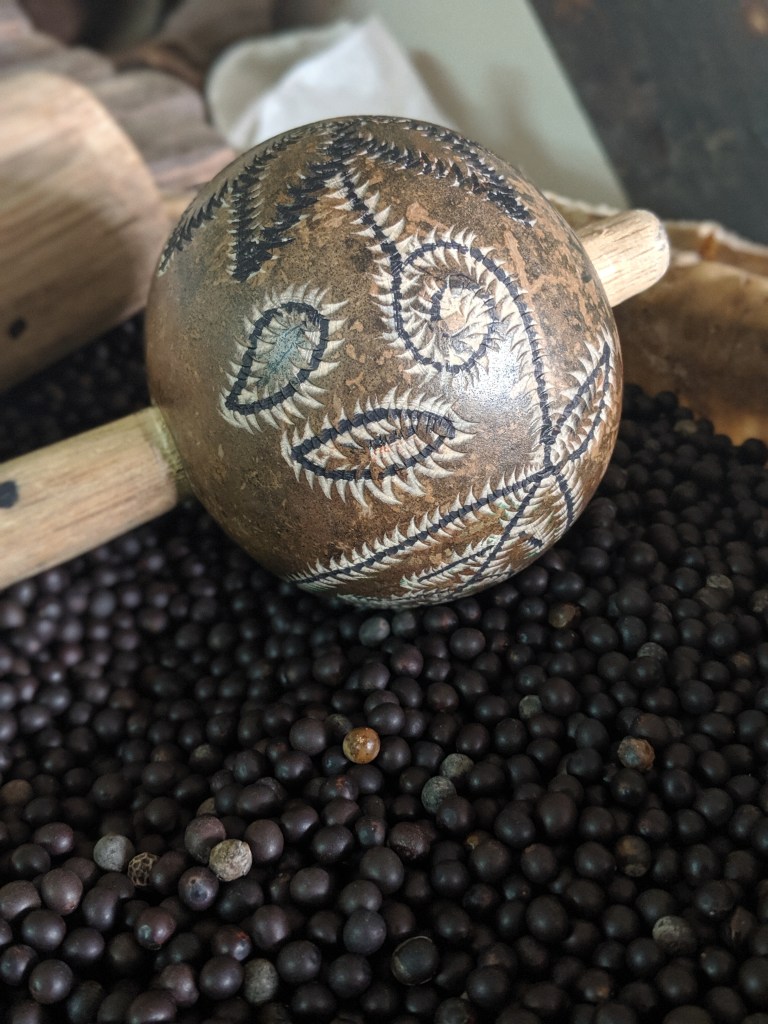
Both guásas and maracas are filled with achira seeds which produce the sound needed for these percussion instruments.
The designs seen on the maraca are carved using the tip of the machete.
Las guasas y maracas se llenen con semillas de achira que producen el sonido que requieren estos instrumentos de percusión.
Los diseños que se ve en la maraca se hacen con la punta de un machete.
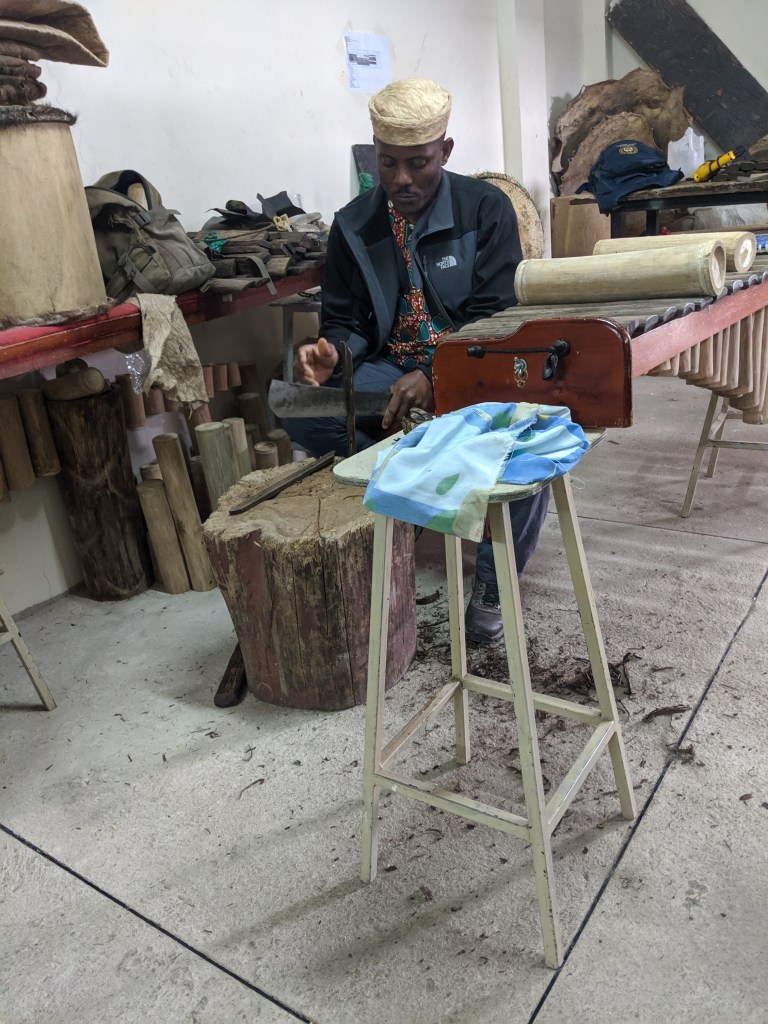
In addition to the achira seeds, the holes in the huasa need to be filled with thin pieces of pambil, the same wood used for traditional marimba tone plates. When the seeds hit these pieces, the sound produced is especially loud due to the properties of the wood.
Además de las semillas de achira, los huecos del huasa se llenan con astillas de pambil, la misma madera que se usa para las tabla de la marimba. Cuando las semillas chocan contra las astillas, el sonido que se produce es aún más fuerte gracias a la sonoridad del pambil.
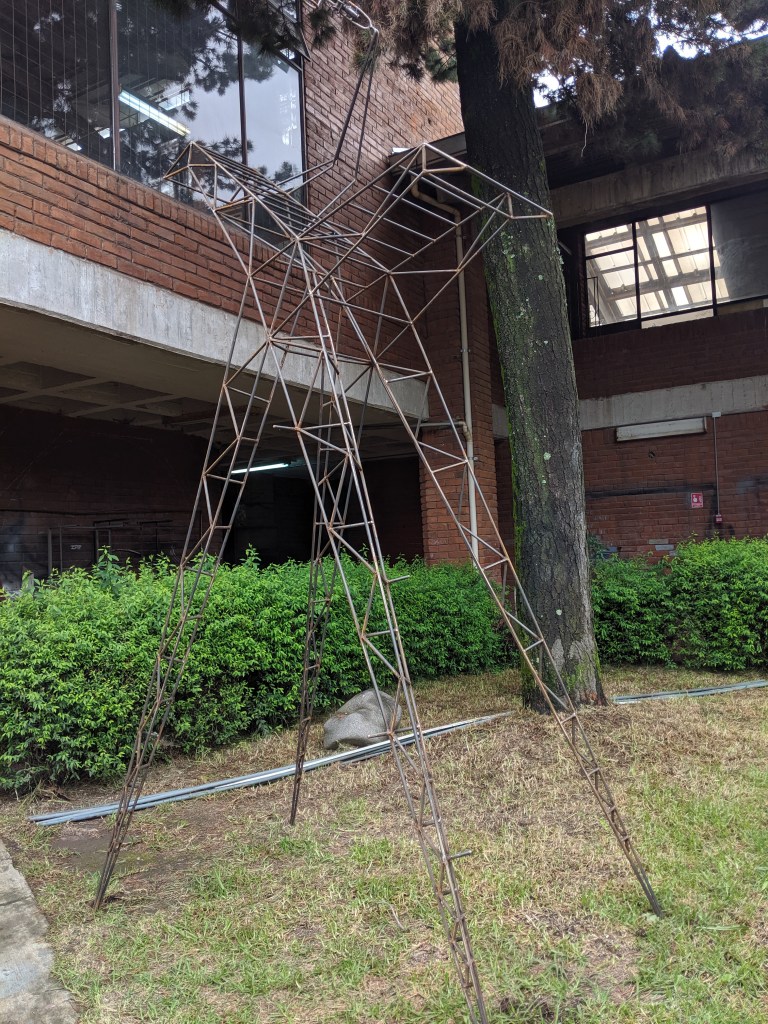
On my way out of Construction, I spotted another creation by the welding workshop students. It looks kind of like a bird. I think.
Saliendo de la clase de Construcción, vi otra creación de los estudiantes del taller de soldadura. Creo que es un pájaro. Tal vez.
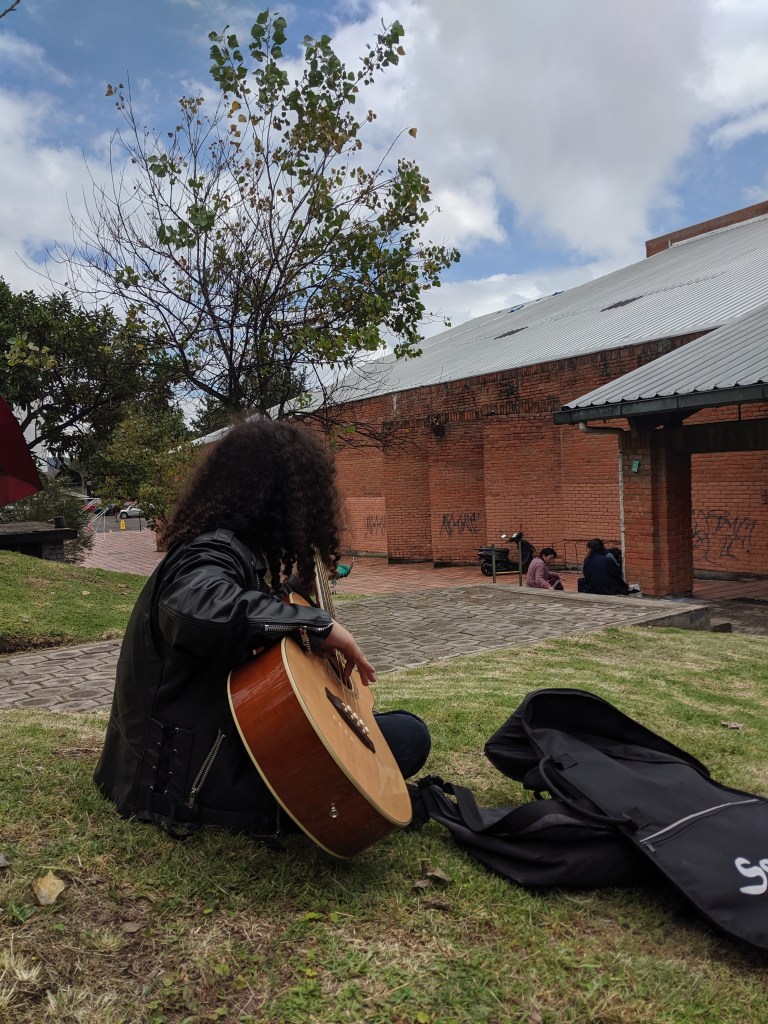
The day cleared up around this point and I lazed about in the sun while listening to my friend jam on his acoustic bass.
El día se despejó a ese punto y disfrute del sol mientras uno de mis compañeros ensayaba con su bajo acústico.
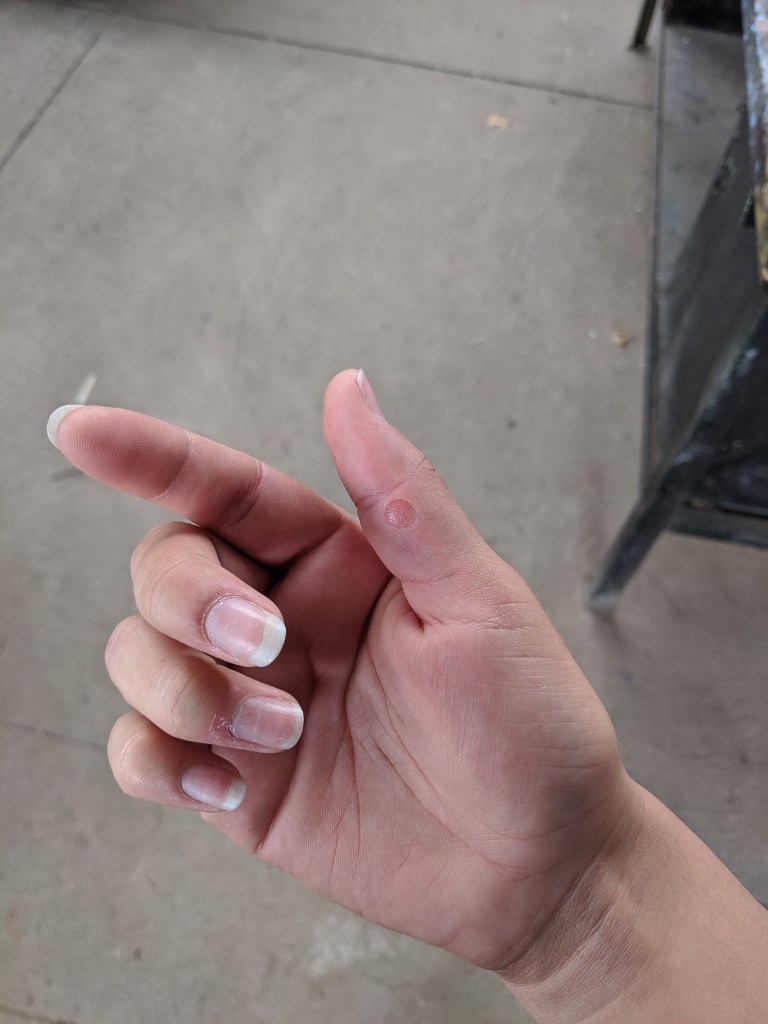
After an hour, I returned to the workshop and work on marimba with Professor Jackson with two other classmates. However, today he had just finished making a new cununo (conga-like drum but smaller) so we jammed with percussion for an hour. I’ve hardly ever played percussion (besides marimba) and I kept hitting my thumb on the edge of the cununo (which consists of dried deer skin and an iron ring). By the end of it all I got a blister and of course, it peeled.
Después de una hora, regreso al taller del Profe Jackson a ensayar marimba con dos compañeros. Pero hoy, como el Profe recién trabajo un cununo (parecido a la conga pero más pequeña), ensayamos sólo con percusión por el resto de la hora. Casi no toco percusión (con la excepción de la marimba) y cada vez que tocaba, golpeaba mi pulgar contra el aro del cununo (hecho de piel seca de venado y un aro de hierro). Después de que terminamos me salió una ampolla y se peló…
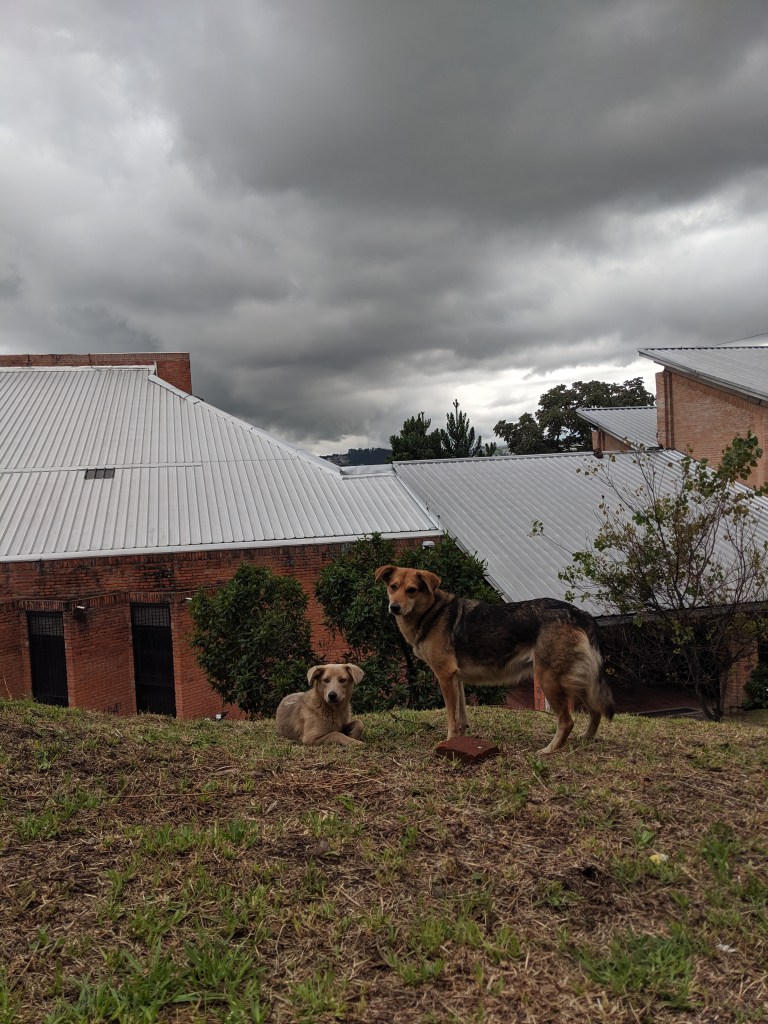
The strays that wander campus…
Los perros callejeros que andan por la U…
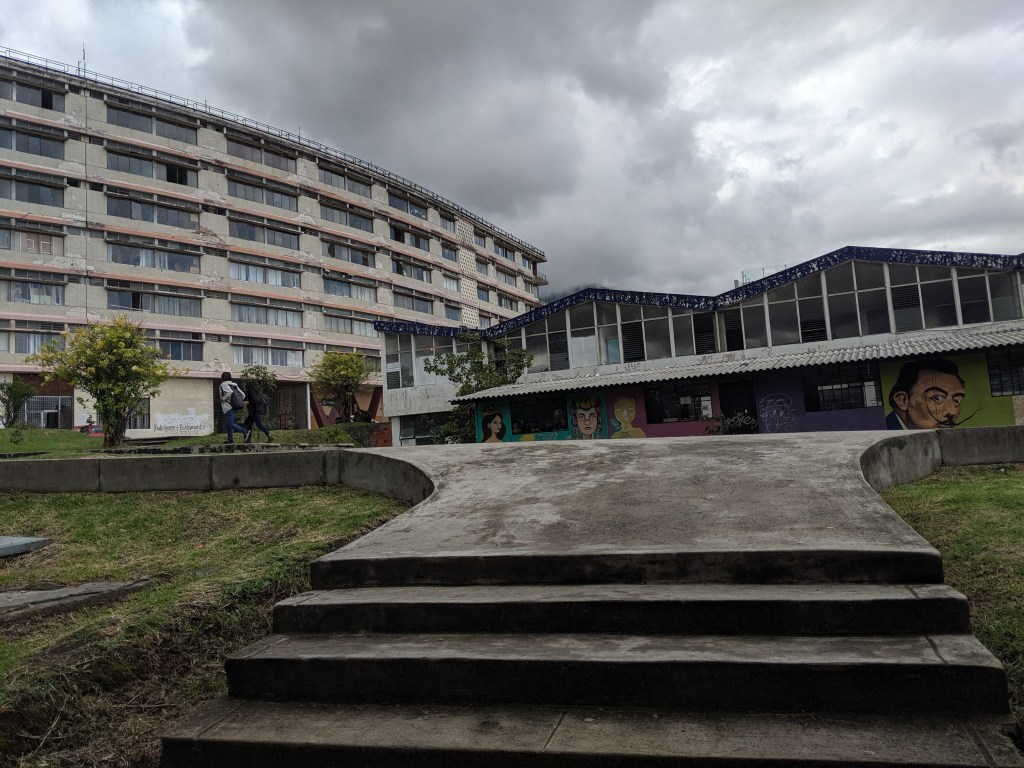
On my path towards sustenance… The building to the right is filled with more practice rooms and classrooms for art/music/theater students. To the left you can see what used to be dorms for students at the UCE but now, due to many a law breaking scandal, is just another space for offices and classrooms.
En camino a la alimentación… El edificio a la derecha esta lleno de más cuartos de ensayo y aulas para los estudiantes de los artes. A la izquierda puedes observar lo que antes eran dormitorios para los estudiantes de la UCE pero ahora, debido a unos escándalos ilegales, es otro espacio para oficinas y aulas.
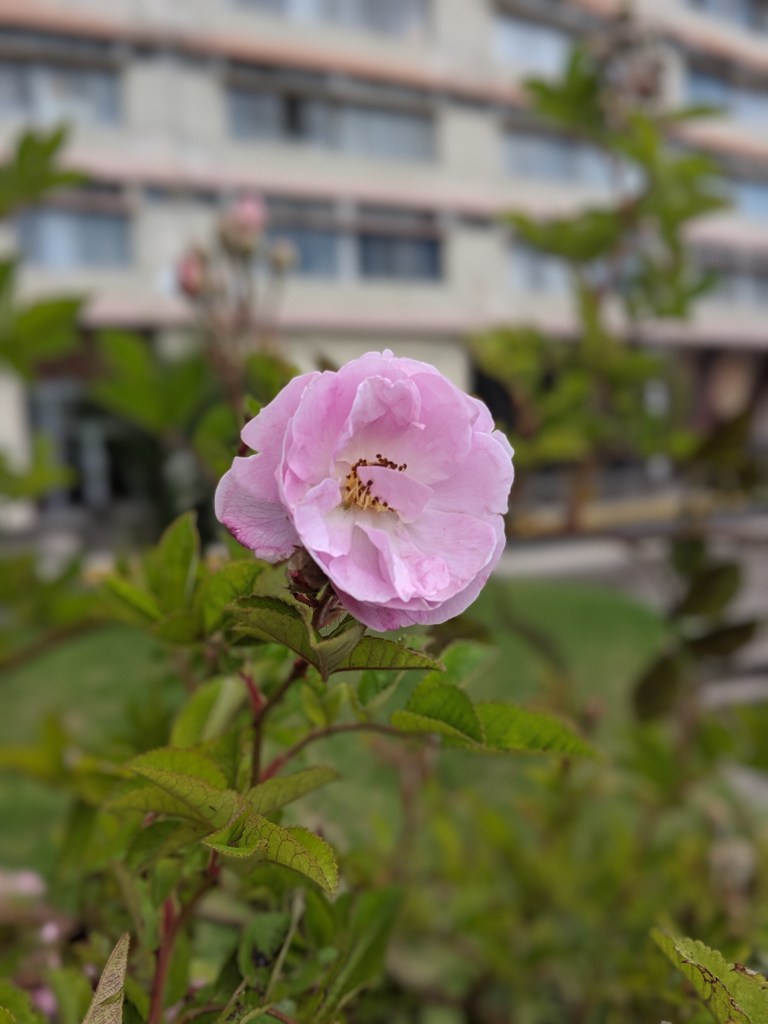
A pretty rose :))
Una rosa bonita :))
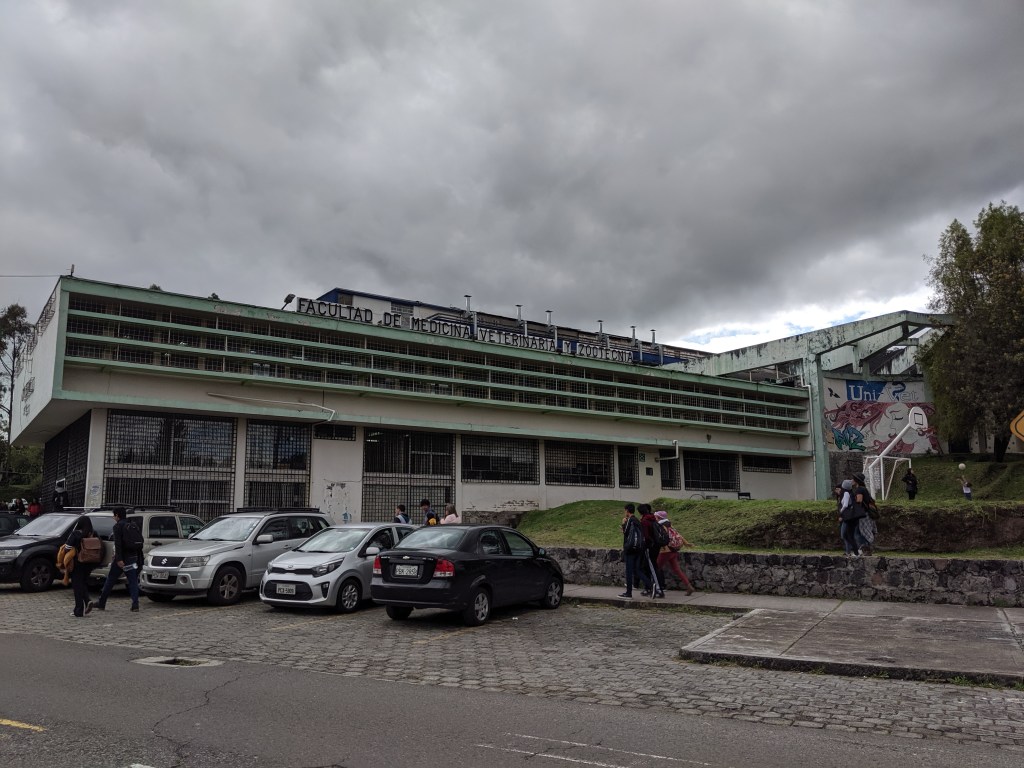
La Facultad de Medicina Veterinaria y Zootecnia (the Department of Veterinary Medicine and Zootechnics) in another lovely building I walk past on my way off campus to grab a bite to eat with David or another group of friends.
La Facultad de Medicina Veterinaria y Zootecnia es otro edificio que paso cuando voy a comer algo afuera de la U con David o otro grupo de amigos.
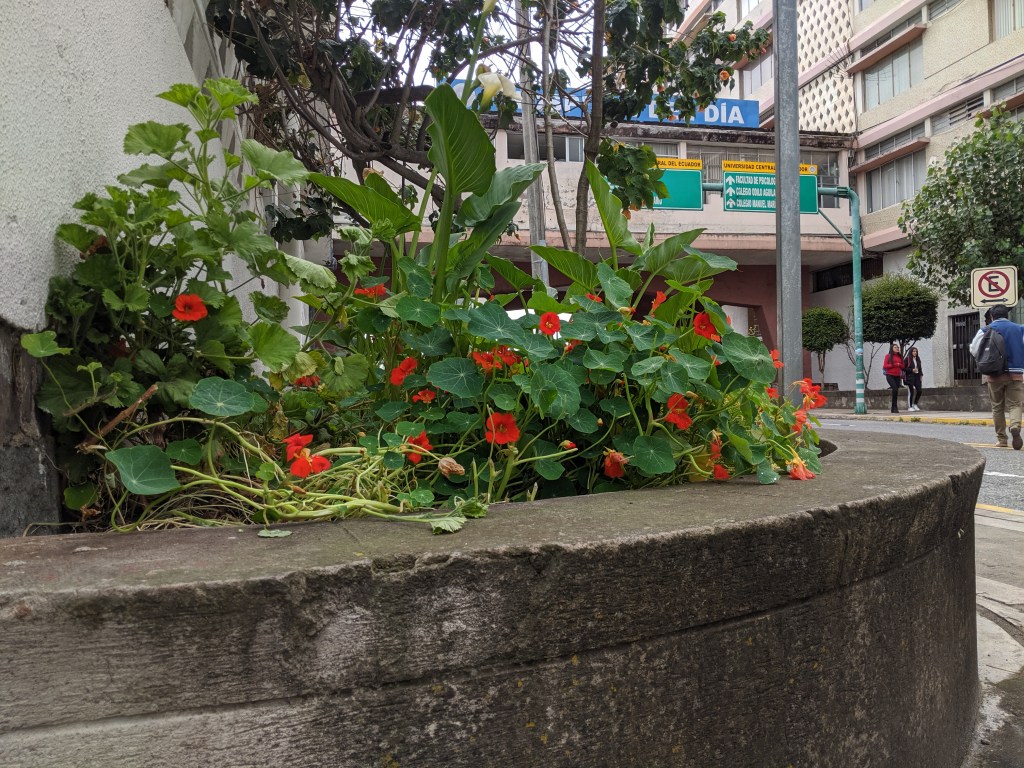
Nasturtiums in bloom remind me of my grandmother back in Oregon and when we would plant the seeds together in the garden… (When you read this post Grandma, remember that I love you so, so much and I hope the cats are doing well.)
Capuchinas en flor me hacen acordar de mi abuela en Oregon y cuando sembramos las semillas juntos en el jardín… (Cuando lees esto Abuela, no te olvides de que te quiero muchísimo y espero que los gatos estén bien.
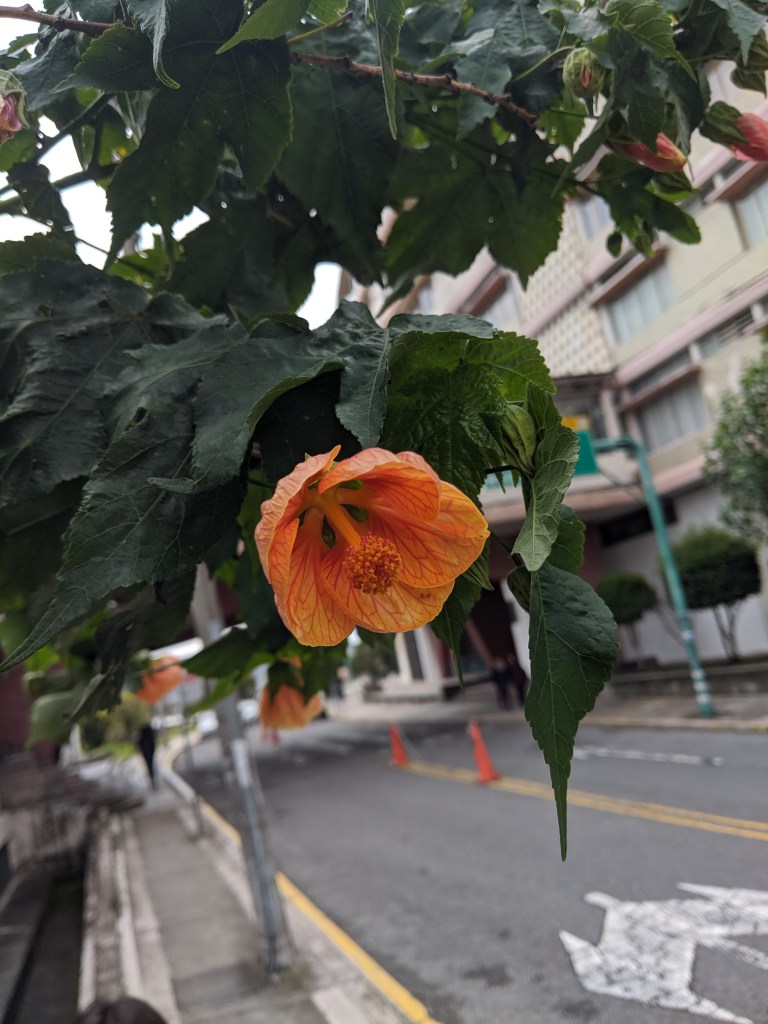
Love me some more pretty flowers :))
Amo las hermosas flores :))
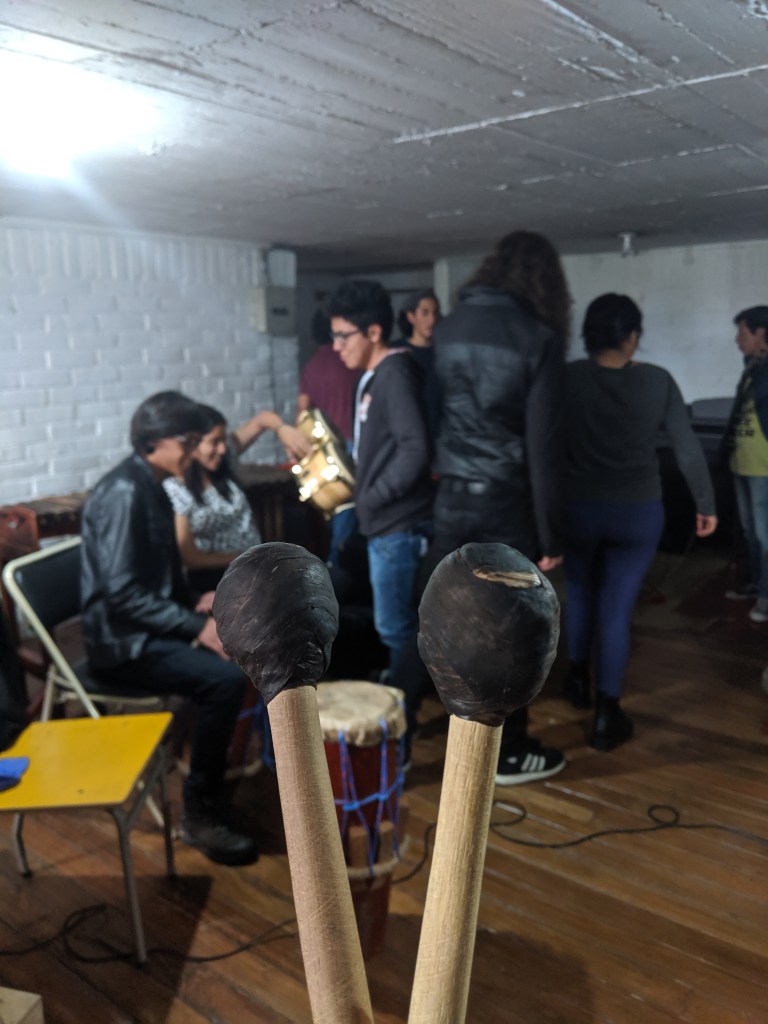
Arguably the best part of my day (and sometimes the most stressful) starts at three and ends at five in the Afro Ensemble. I sing and play marimba and have a good time playing traditional and fusion Afro-Ecuadorian music.
Those are my mallets in the photo, made from light wood and rubber. This rubber is laid out to dry on a wooden board for three days in the sun and then the stick is wrapped in the stretched out rubber.
La mejor parte de mi día (y a veces el más estresante) empieza a las tres y termina a las cinco en el Ensamble Afro. Yo canto y toco marimba y me divierto tocando música Afro-ecuatoriana tradicional y fusionada.
Esas son mis baquetas en la foto, hechas de madera liviana y caucho. El caucho se seca tres días al sol en una tabla de madera y después se envuelve la baqueta con el caucho estirado.
After Ensemble is over, I catch the bus home and either spend the rest of the evening writing for the blog, planning for English class, or teaching an English class. Wednesday is the busiest day of the week and the most exhausting at that, but I always look forward to it because I get to learn so much.
I hope you all enjoyed this guide to my life at the UCE and the next post is coming soon…
Después de que se acabe el Ensamble, regreso a la casa en bus y paso el resto de la noche escribiendo para el blog, planeando para mis clases de inglés, o enseñando inglés. Miércoles es mi día más ocupado de la semana y me canso mucho, pero es mi día favorito porque aprendo bastante.
Espero que todos disfrutaron de esta guía de mi vida en la UCE y la próxima publicación viene pronto…
– Korayma

 Ecuador: A Journey
Koryma,
I love your “Day in the Life” post. Also, the art around your campus is BEAUTIFUL! I was very fascinated with everything you talked about in your construction class; I have never heard of a class like that and love that you are getting that opportunity.
Miss you here. The days are grey, wet, and dreary.
Chloe’
LikeLiked by 1 person
Chloe’,
I’m glad that you’re enjoying the blog and we miss you lots!
Kory
LikeLike